Should You Paint Aluminu...
- Mon to Fri: 09:00 am to 07:00 pm
Key Takeaway
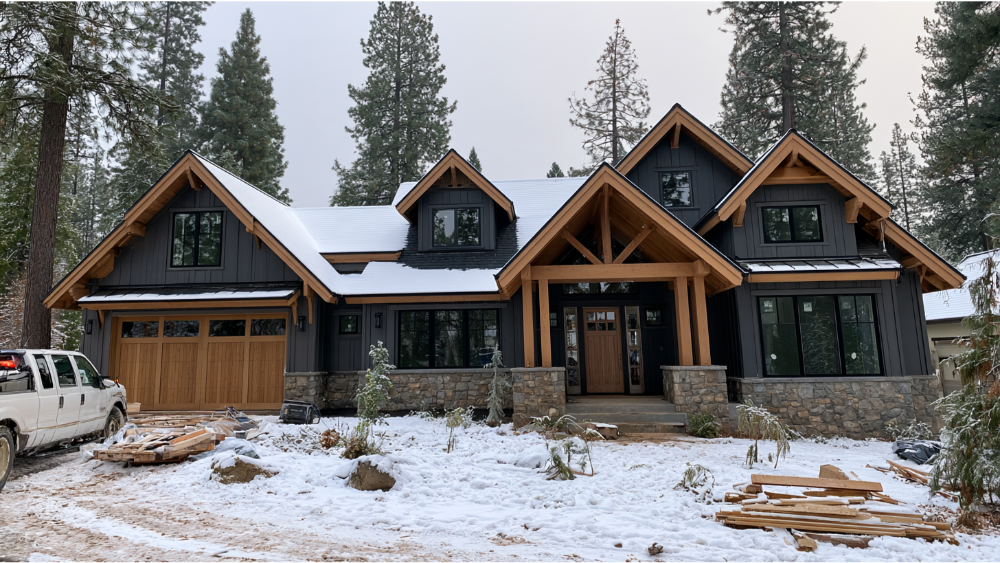
Yes, siding can be installed in winter when the installer follows manufacturer instructions and adjusts for cold temperatures, moisture, and site safety. The siding material and the temperature limits of caulk, paint, and tape – not the season – set the real threshold. Vinyl siding requires 3/8-inch expansion clearance below 40°F, while fiber cement handles freezing conditions better and can be installed near 0°F. A qualified contractor with a documented cold-weather process can deliver a quality result any month of the year.
Yes. Most siding can be installed in winter when the installer follows the manufacturer’s current instructions and adjusts for cold weather, moisture, and safe site access. What actually decides the question is the siding material you’ve chosen, the temperature limits of the paint and sealant going on with it, whether the wall and the materials are dry, and whether crews can work safely on ladders and scaffolding. The calendar is rarely the real obstacle.
If you’re weighing whether to move forward now or hold off until the warmer months, the difference comes down to specifics. Below we cover what temperatures actually matter, how each siding material behaves when the temperature drops, when work should stop, and the questions that will tell you quickly whether a contractor has a real cold weather process. Many homeowners ask us about installing siding in the winter every year, and the honest answer is that the siding system decides it, not the season.
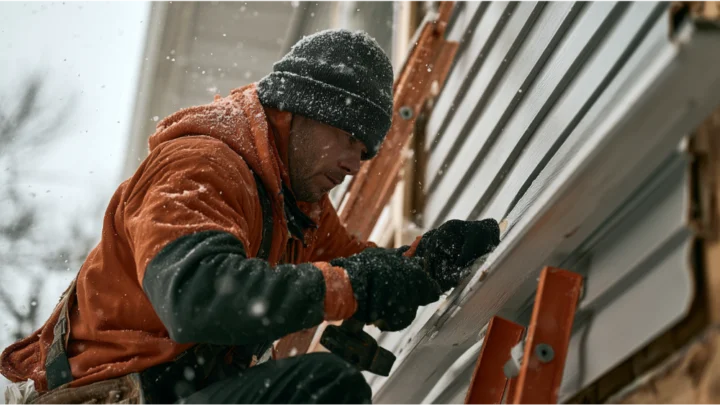
Here’s the distinction almost every article on this topic misses: the siding panel and the siding system are two different things. The board may be perfectly installable at a temperature where the caulk, flashing tape, touch-up paint, or field paint is not. Vinyl expands and contracts noticeably as temperatures swing. Most exterior caulks and adhesives carry a minimum application temperature. Winter means shorter daylight and fewer usable working hours. None of that stops the work. It changes how the work gets sequenced.
Four things control whether a siding project can proceed during the winter months:
Most homeowners assume the season rules out exterior work entirely. It doesn’t. Cold weather installation requires careful planning, but it does not require a different definition of quality.
There’s no single temperature that stops all siding work. The 40°F number gets repeated constantly online as if it were a universal rule, but it isn’t. It’s a vinyl siding expansion clearance threshold, and it also happens to be a common minimum for certain sealants.
Here’s what the actual thresholds look like. Vinyl siding installation guidance calls for at least 1/4 inch of clearance at openings and stops under normal conditions, increasing to 3/8 inch once the temperature drops below 40°F. Many vinyl siding manufacturers treat roughly 20°F as a practical floor for installation. One widely used exterior siding sealant requires application above 40°F with no rain or freezing temperatures forecast within 24 hours. Some modern exterior coatings can be applied at 35°F, provided the air, the surface, and the product itself all meet the requirement, and one major coating manufacturer flags the first 48 hours as a critical curing window. LP’s current instructions for ExpertFinish touch-up paint require air, siding, and paint all above 50°F. Fiber cement board itself tolerates far lower temperatures than any of those finishing products, and its material performance holds up in extreme cold.
So the rule the whole thing turns on is simple: the lowest temperature limit among the products being installed that day controls the schedule. Not the siding. Not the season.
A 45°F afternoon can sit over a north-facing wall that’s still 32°F in the shade. Panels that spent the night stacked outside are colder than the air around them. A surface only slightly cooler than the air can be enough to keep a sealant from bonding the way it should, which matters for cutting, handling, and anything that has to adhere. Storing materials in a conditioned space for at least 24 hours before installation keeps them more flexible and easier to cut cleanly. And the forecast during curing matters as much as conditions at the moment of application.
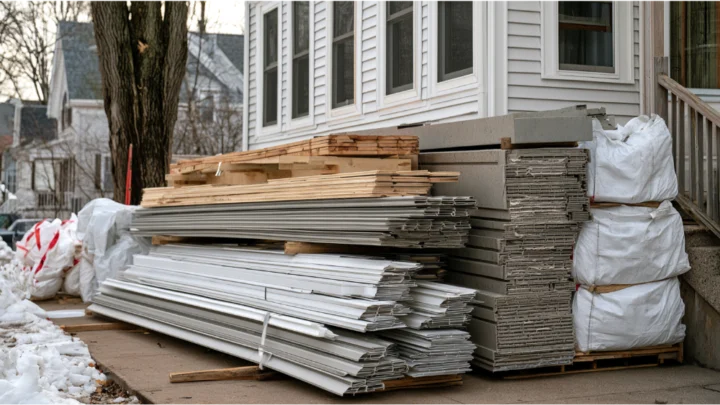
Material choice changes the winter conversation more than anything else. Some products are nearly season agnostic. Others need real adjustments to the installation technique. Here’s the short version before we get into specifics.
| Material | Can it be installed in winter? | Main winter concern |
|---|---|---|
| James Hardie / fiber cement siding | Generally yes | Field paint, caulk and touch-up limits, safe access |
| Vinyl siding | Yes, with adjustments | Brittleness, expansion clearance, fastening |
| LP SmartSide / engineered wood | Often yes | Dry substrate, sealed cut edges, finish temperatures |
| Natural wood | Possible | Moisture content, storage, priming and finishing |
Yes, with technique adjustments that matter a great deal. Vinyl siding is popular partly because it’s low maintenance, but cold vinyl is more brittle and cracks more easily from incidental impact or a careless cut, so handling and cutting discipline go up. Panels can expand up to roughly half an inch as temperatures rise, which is why clearance at openings and stops increases from 1/4 inch to 3/8 inch below 40°F. Fasteners get centered in the nailing slots and left slightly loose, about 1/32 inch between the fastener head and the panel, roughly the thickness of a dime, with about 1 1/4 inches of penetration into nailable material. Nail a panel tight on a 25°F morning and it will buckle under extreme heat come summer.
A few more details separate a careful winter vinyl siding installation from a rushed one. Cut with a fine-tooth blade reversed in the saw, or score and snap, and schedule cutting for the warmest part of the day. Store panels flat and indoors overnight so they aren’t rigid when crews pick them up. Never force a panel into a receiving channel, and lock each course gently into the one below instead of pulling it tight. Crews who install vinyl siding in January also leave room at every stop, because the gap that looks generous when the panel is installed is the same gap keeping that wall flat next summer.
Generally yes, and fiber cement siding handles low temperatures better than vinyl siding because it doesn’t share the same thermal movement problem. Fiber cement has been installed in severe winter conditions, including documented jobs near 0°F. James Hardie HZ5 products are engineered for climates with freezing temperatures, snow, ice, and wide seasonal swings, and they’re built to resist shrinking, swelling, and cracking after wet and freezing exposure. The bigger advantage for winter installation is finish: ColorPlus Technology products are cured in a factory controlled environment and arrive ready to be installed year round, so there’s no need to field paint an entire house in cold weather. Primed siding that still needs field paint is a different situation. Caulks and adhesives still have to be rated for the temperatures they’re applied in. We’re a James Hardie Certified Installation Company, and our crews work year round, installing to current Hardie instructions regardless of season.
Often yes for engineered wood, with the finishing work sometimes waiting for a better window. LP’s instructions prohibit installing over rain-soaked or buckled sheathing and require a water-resistive barrier behind the siding. Primed LP siding must be painted as soon as possible and within 180 days, which gives real flexibility. ExpertFinish touch-up needs air, siding, and paint above 50°F, applied to dry surfaces with no condensation likely. For natural wood, USDA Forest Products Laboratory guidance points to using dry material, protecting it in storage, providing drainage and clearance, and installing proper flashing. The boards can go up while the finish waits.
Start with the fear behind the question. Your house doesn’t get colder because siding is replaced in winter. A qualified crew never strips an entire exterior wall down to framing and walks away for the weekend. Walls are opened in sections, and the water-resistive barrier goes back on before the day ends.
On energy bills, be realistic. Most siding materials carry a very small insulation value on their own. Siding is a weather skin, which is exactly why insulated siding exists: the foam backing behind insulated vinyl siding reduces thermal bridging through the studs and is a common choice when heat loss is the priority. If your home’s insulation is thin or you have drafty windows, those are usually the bigger culprits behind high energy bills, and siding alone won’t solve them. What new siding does reliably is reduce air leakage, especially when it’s installed with a properly integrated water-resistive barrier and sealed penetrations around windows and openings. That means a slightly warmer home and a modest gain in energy efficiency through the colder months. Re-siding is also the most visible exterior project a home can get, so property value and curb appeal tend to move in the right direction together. Markets differ, but a sound, well finished exterior is the first thing buyers notice and the thing they discount hardest when it’s failing.
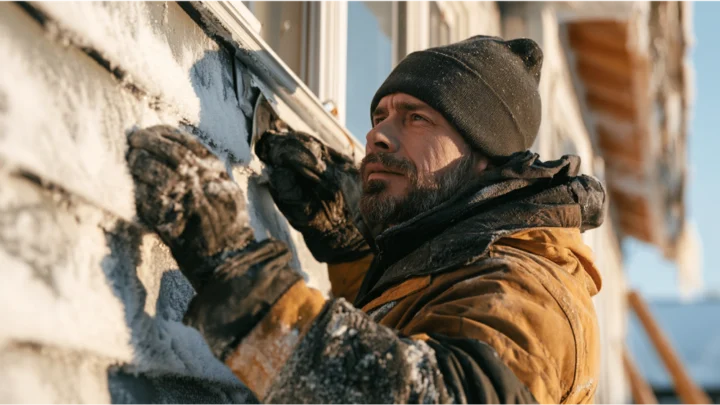
Some days the right call is to stop. Work should pause when:
A weather pause is a sign your contractor is managing the project properly. We’d rather hold a day and do it right than push through conditions that leave us compromising quality for the sake of a schedule.
Siding ripped off carelessly exposes framing and sheathing to winter storms. When you’re installing siding in the winter, the sequence is what protects the house:
One practical note: winter work often means less landscaping and vegetation crowding the area around the foundation, which makes access and cleanup simpler.
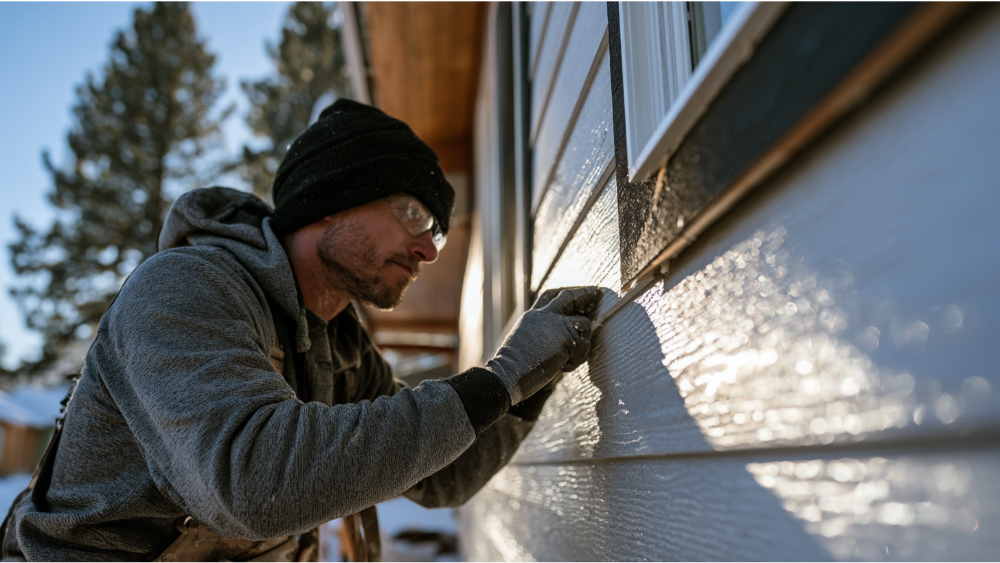
Installing siding in the winter doesn’t void a warranty. Departing from the manufacturer’s current instructions can. LP states plainly that warranty remedies may be unavailable when required installation, finishing, handling, and maintenance instructions aren’t followed. James Hardie emphasizes that improper installation may affect product warranty coverage.
There are two separate warranties in play, and homeowners often conflate them. The manufacturer’s product warranty covers the siding itself. A contractor’s workmanship warranty covers the installation. We back ours with a 10-year labor warranty: if something happens with our work, we come back and repair it.
Winter may not be the easiest season to re-side a home. But “not ideal” and “cannot be done correctly” are two very different statements, and plenty of advice online blurs them together.
Move forward, or at least get an inspection, when:
Waiting may make sense when:
Off season scheduling is a genuine factor worth asking about, since spring and summer calendars fill first and many contractors are booked solid through the summer months. Availability and labor rates vary between contractors and regions, so treat it as a question rather than an assumption. And a damaged wall left through another season keeps taking on water the entire time.
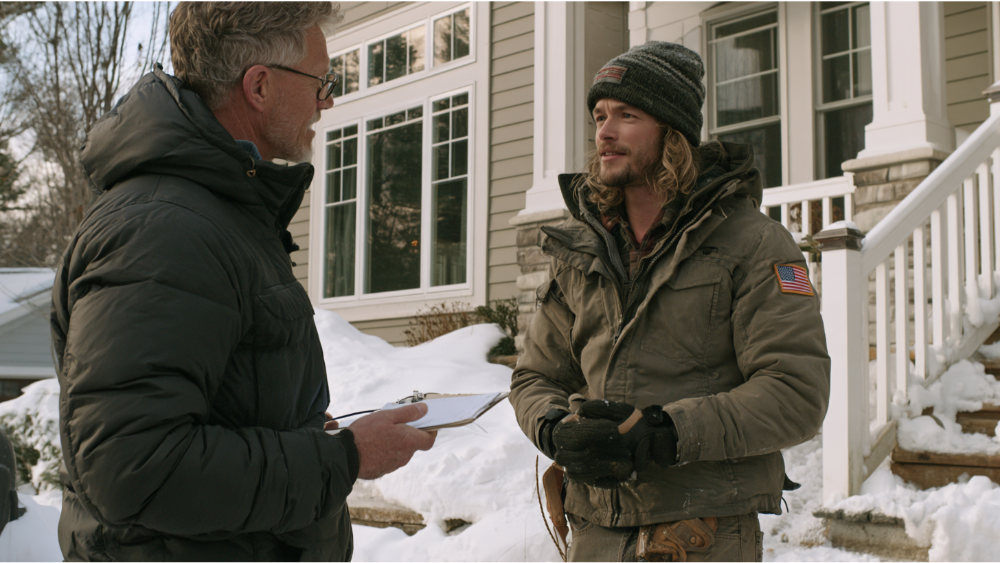
Like most home improvement projects, this one goes better when you ask good questions early. Before you hire anyone to install siding in the winter, ask these:
Contractors who answer these with specifics are showing you their process rather than selling you.
There’s no single cutoff. Many manufacturers treat roughly 20°F as the practical floor, and vinyl siding installation below 40°F calls for 3/8 inch clearance at openings and stops instead of the usual 1/4 inch. In most cases the caulk, tape, or paint being used alongside the siding sets the real limit for the day.
It depends on the material and product line, the actual wall area and number of stories, trim and accessory details, the condition of the sheathing underneath, and whether the finish is factory applied or field painted. We handle pricing through a free, no-obligation estimate after a contractor inspects the home. We do carry a project minimum, which we’ll discuss during the estimate.
Fiber cement generally handles freezing and thawing better than vinyl siding because it doesn’t expand and contract as dramatically. James Hardie HZ5 products are engineered specifically for climates with freezing temperatures, snow, and wide seasonal swings, and they can be installed year round. Insulated vinyl siding is a common pick where thermal bridging is the main concern and a more energy efficient wall is the goal. A free inspection helps match the material to your wall.
Mild, dry stretches are the easiest to work in. But the best time for a siding replacement is whenever your wall has stopped protecting the house and conditions allow the selected system to be installed to spec. Winter installation can sometimes mean more scheduling flexibility, which is worth asking about when you call.
Plenty of homeowners install siding in the winter and get an excellent result. Material handling, moisture management, installation technique, and crew safety are what determine whether it’s the right call for your home right now.
Pro Superior Construction has been family owned and operated since 2013, with more than 10 years of experience behind every project. We’re fully licensed and insured under CSLB License #986607 and a James Hardie Elite Preferred Certified Installation Company, which means our installations are held to the manufacturer’s own standards. The same discipline we bring to large multifamily projects goes into every single-family home we touch.
Request a free, no-obligation estimate online or call us at (916) 474-4483, Monday through Friday. A contractor will inspect your home, assess the siding and the wall underneath it, and tell you honestly whether current conditions are right for the system you want.
