Custom Windows Cost: Wha...
- Mon to Fri: 09:00 am to 07:00 pm
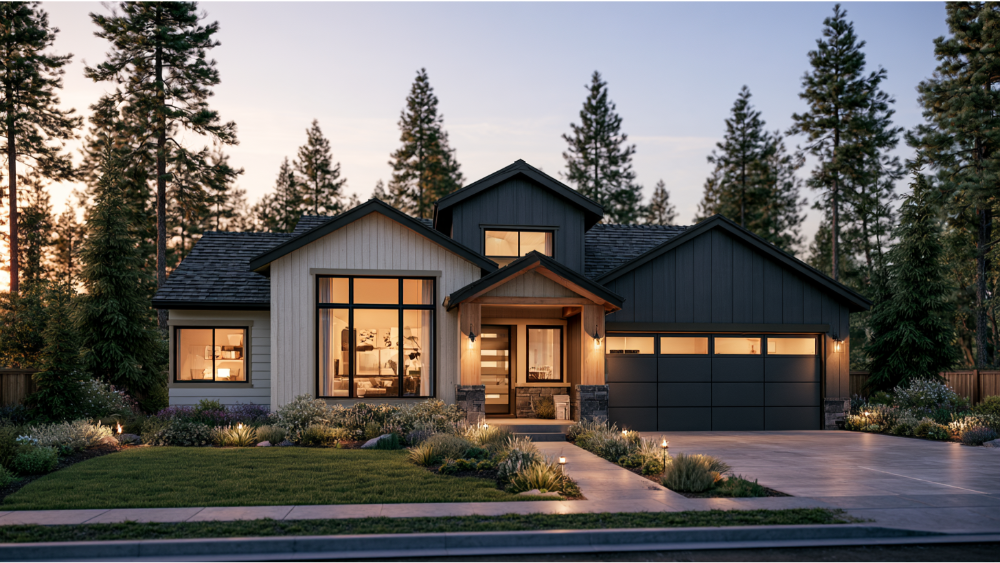
Key Takeaway
Composite siding is exterior cladding made by combining two or more materials, such as wood fibers and resin, cement and cellulose, or wood fiber and thermoplastics. The three main families are fiber cement, engineered wood, and polymer composites, each with different fire ratings, moisture resistance, and maintenance needs. Fiber cement carries a 30-year warranty from James Hardie, while LP SmartSide offers up to 50-year prorated coverage.
Composite siding is a broad umbrella term for exterior cladding built by combining two or more materials: wood fibers and resins, wood and plastic, or cement and cellulose. It describes how a product is made, not how it performs. Fiber cement, engineered wood, and polymer or wood-plastic composite (WPC) products can behave very differently from one another in fire, moisture, impact, and movement, and two products inside the same family can differ as well. Durability, fire behavior, maintenance, and style depend on the specific product and its published test data, not on the word composite. If you are planning a siding project and keep seeing that word used three different ways, here is how to decode your composite siding options.
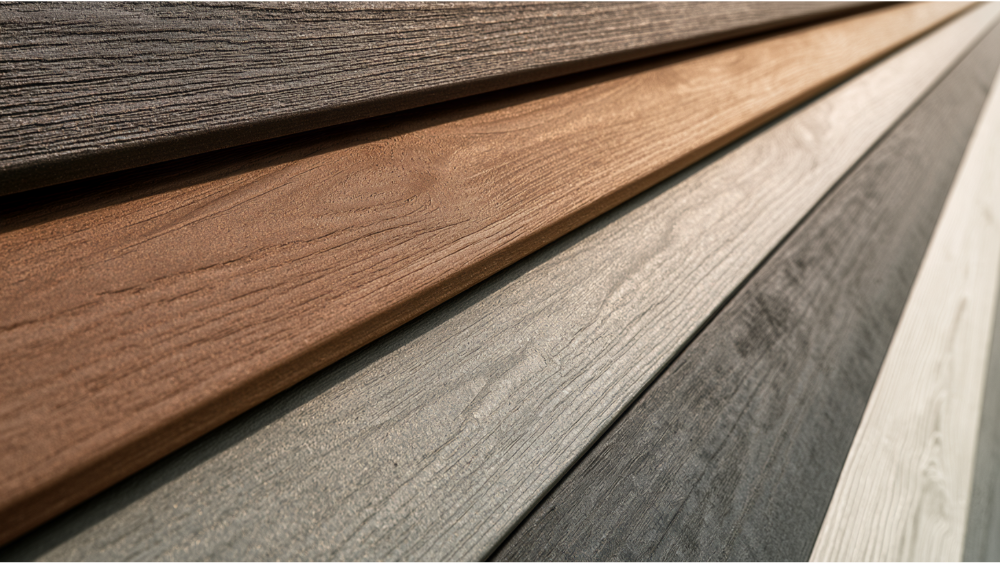
Some sellers use the word for any multi-material cladding. Others mean only wood fiber mixed with resin or plastic, often around 60% wood to 40% polymer. A few use it for all-plastic PVC panels with no wood at all. Fiber cement is technically a composite too, even when a retailer shelves it in its own aisle. Because the label covers such a wide range of products, it tells you almost nothing about performance on its own. Ask what the seller means, and ask for the specific product name, before you compare.
Portland cement, sand, water, and cellulose fibers pressed into dense, rigid boards and panels. It arrives factory-finished in a deep color range, from soft whites to near black, or primed for field paint. It is generally the heaviest family, and many products in it are highly dimensionally stable through seasonal swings, which makes them a steady base for sleek modern lines. Thickness, profile, and finish still vary product to product.
Wood strands or fibers bound with resins and waxes, with preservative treatments worked in at the plant. Panels are lighter, which is part of why crews report easy installation on tall walls, and deep cedar grain embossing carries the natural beauty and warmth of real cedar from the curb. A common pick when a homeowner wants rustic character on a modern silhouette. Treatment levels, clearance rules, and finish warranties differ by manufacturer.
Wood fiber combined with thermoplastics, or all-plastic PVC panels, some made in part from recycled plastics. Composition varies sharply by product. Certain poly-ash boards are documented to absorb essentially no moisture and will not rot or feed insects, while other products in the same category behave differently. Fire behavior, expansion, and fastening rules also differ by manufacturer, so read the data sheet for the exact board you are considering.
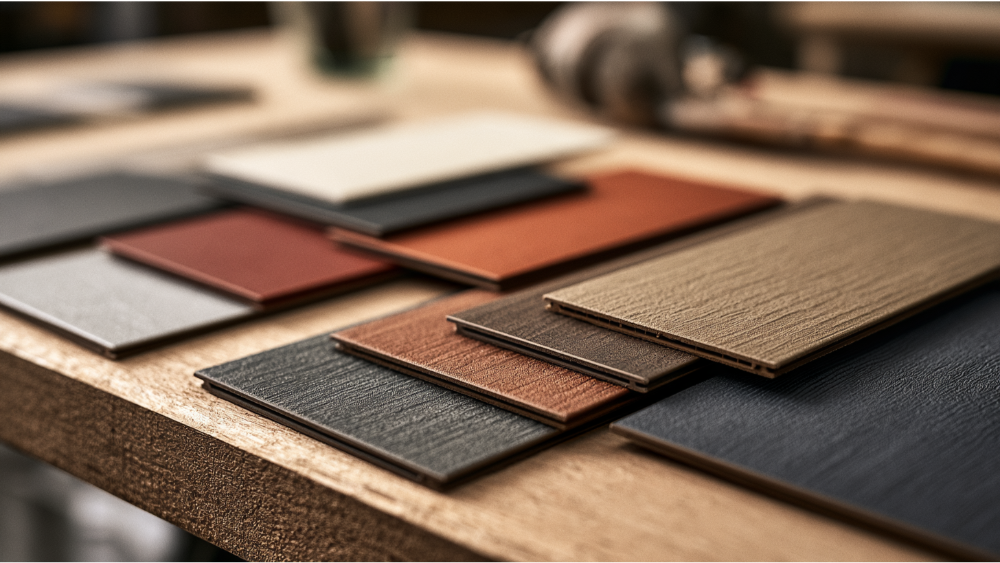
Use this as a starting point only. These are general tendencies within each family, not guarantees, and every line needs to be verified against the specific product’s technical documents and test reports. Suppliers often keep only a few stock colors on hand, so confirm availability early.
| Fiber cement | Engineered wood | Polymer / WPC | |
|---|---|---|---|
| Composition | Cement, sand, water, cellulose | Wood fibers, resins, waxes | Wood fiber plus thermoplastic, or PVC |
| Fire behavior | Many products documented to ASTM E136; verify the specific board | Generally combustible; verify the product’s test data | Product-specific; verify testing |
| Weather and moisture | Often dimensionally stable; seal cut edges per the manual | Clearances and finish integrity critical | Absorption varies; some products absorb almost none |
| Impact resistance | Varies by product and thickness; can chip on hard strikes | Many products absorb impact well; confirm by product | Varies widely |
| Color and finish | Factory color or field paint | Often repainted before the finish fades | Some never require repainting |
| Style and profiles | Lap, panel, shingle, board-and-batten | Lap, shake, cedar grain | Lap, shake, smooth or grained |
Compared with natural wood, many composite products ask less of you, though the specifics depend on the product you buy. Some lines skip the annual staining cycle entirely, and products treated or formulated against rot, mold, mildew, and insect damage hold up well after decades of weather. Washing with soap and water handles most maintenance on most products. Factory color stays consistent panel to panel, and the advanced durability of modern finishes means you can often enjoy the same appearance years longer than a field-applied coat lasts. The upfront investment runs higher than basic vinyl, but you get a more convincing wood look, stronger curb appeal, and typically fewer repair cycles. Check each manufacturer’s care instructions, because warranty coverage usually depends on following them.
It depends on the specific product, and no cladding should ever be called fireproof. ASTM E84 measures surface flame spread and sorts results into Class A (0 to 25), Class B (26 to 75), and Class C (76 to 200), though a Class A result alone does not make a material noncombustible. ASTM E136 is the combustibility test, run at 750°C (1,382°F). Many fiber cement products are documented as complying with E136, though applied finishes can still char, and the compliance belongs to the tested product rather than to the category. Engineered wood is a wood-based material and is generally combustible, and polymer composites must be checked product by product. FEMA post-fire investigations found noncombustible siding generally outperformed wood and vinyl, though eaves, vents, windows, and nearby fuels matter just as much.
If your home is in a California wildfire-prone area or a designated Wildland-Urban Interface (WUI) zone, do not shop by material category. Compare the actual product’s fire test documentation and listings against the requirements that apply to your address, including California Building Code Chapter 7A and local fire authority rules, and confirm with your building department which exterior wall assembly and ignition-resistant listings they will accept. The right answer is whichever listed product and assembly meets those requirements on your lot.
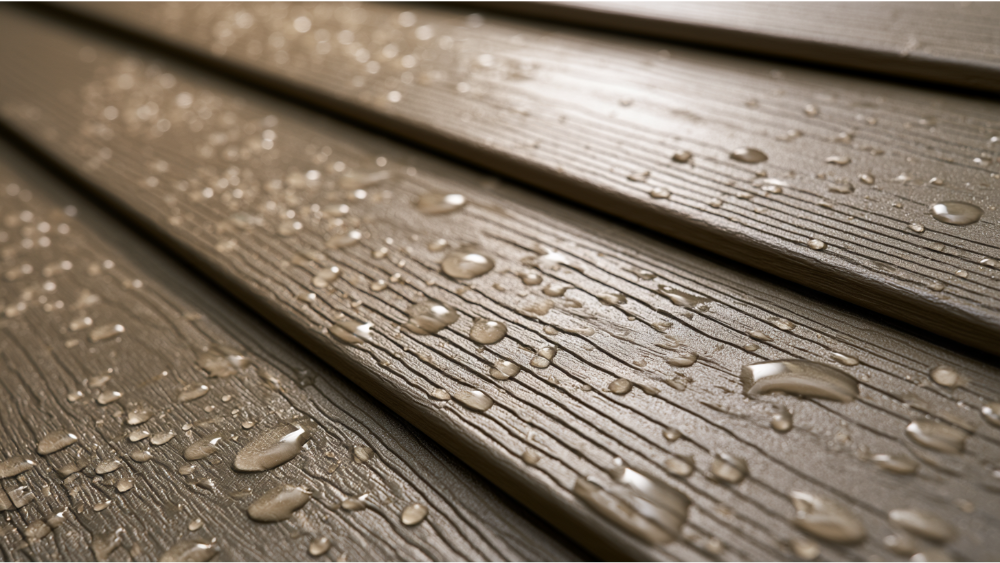
Moisture performance is a property of the specific product and the assembly behind it, not of the word composite. Siding sheds water, but it is not the whole drainage system, and treating it that way is how walls fail. Model codes call for a water-resistive barrier behind most cladding, flashing at windows, doors, and roof-wall intersections, plus a drainage path so anything that gets behind the panels can exit. Real protection comes from that secure assembly working together. Engineered wood products commonly require about six inches between siding and finished grade. Panels have to be fastened securely with manufacturer-approved fasteners, and cut edges need the treatment the manual specifies, because that is where weather resistance is usually lost first.
Many modern lines use recycled wood fiber and other recovered content, a real advantage over virgin material. But eco friendly means different things from one plant to the next, so ask for the manufacturer’s environmental documentation for the product you are actually buying.
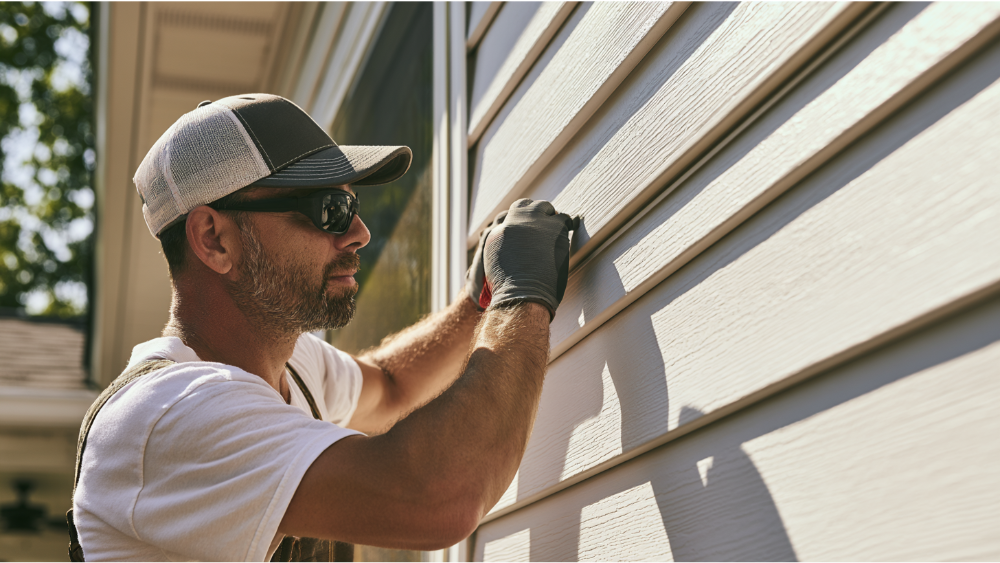
A warranty is a legal promise, not a prediction of service life. James Hardie fiber cement products currently carry a 30-year non-prorated limited substrate warranty, with a 15-year limited finish warranty on factory-applied ColorPlus® Technology color. LP® SmartSide® advertises a 5/50-year structure: five years of full labor-and-material coverage, then prorated product coverage through 50 years. Terms change, so verify the version in effect on your order date. Coverage almost always depends on correct installation and documented upkeep.
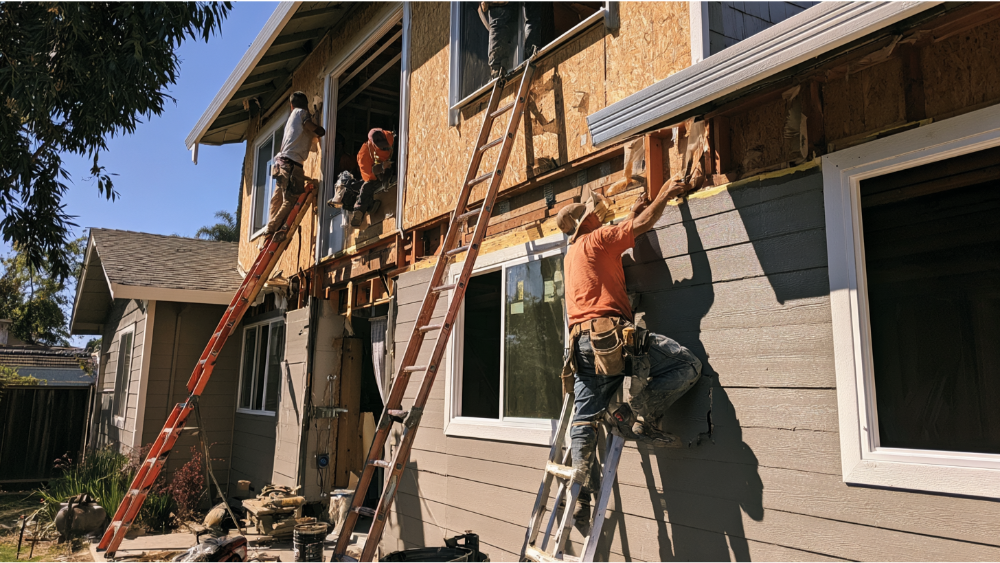
Knowing the sequence helps you compare bids and spot a contractor who is skipping steps. A typical composite siding replacement moves through these stages:
Exterior cladding made by combining two or more materials, such as wood fiber and resin or cement and cellulose. It is a broad term covering very different product families, so performance depends on which specific product you buy.
Factory finishes hold deep colors far better than field paint. Dark panels still run hotter in sun, so follow the manufacturer’s guidance on fastening and clearances.
It costs more than basic vinyl but delivers a more convincing wood look. Fiber cement is itself a composite, so the real comparison is among specific products within the three families.
Durable cladding only performs when it is installed to the manufacturer’s instructions. Pro Superior Construction is a family owned residential siding and window specialist founded in 2013, with 10+ years of experience, fully licensed and insured under CSLB License #986607, James Hardie elite preferred certified, and BBB A+ accredited. When you are ready, get a free, no-obligation estimate through our form or call (916) 474-4483, Monday through Friday, 9 AM to 7 PM. A contractor will inspect your home and help you create an exterior you feel good about, with the peace of mind of knowing we are not finished until you are happy with the result.
