Leaking Window? How to F...
- Mon to Fri: 09:00 am to 07:00 pm
Key Takeaway
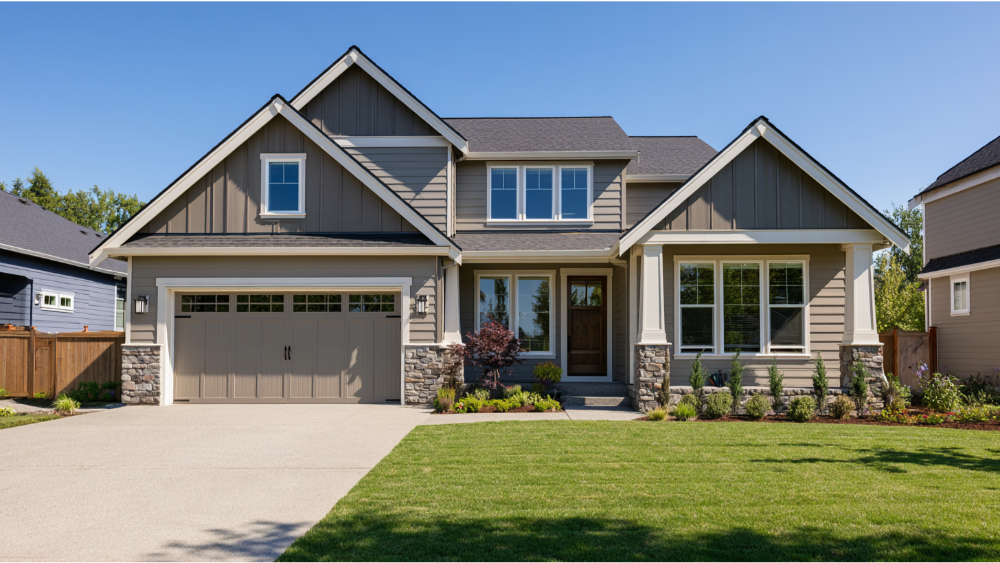
Concrete siding that looks like wood is almost always fiber cement siding, a composite of Portland cement, sand, water, and cellulose fibers pressed into boards that mimic cedar clapboard, shingles, or board-and-batten. It resists rot, termites, and fire, and James Hardie backs its products with a 30-year non-prorated limited warranty. Installation quality matters as much as the material itself, since proper flashing and water management determine long-term performance.
When homeowners search for concrete siding that looks like wood, they’re almost always describing fiber cement siding. It’s Portland cement, sand, water, and cellulose fibers pressed into boards and planks, then embossed to mimic cedar clapboard, shingle, or board-and-batten. You get the look of natural wood without wood’s vulnerability to rot, swelling, and termites.
Precast concrete log siding exists too, but it’s a niche product built for log-home aesthetics. If you’re comparing materials before a siding replacement, here’s what fiber cement actually is, how convincing the wood look gets, and what makes it perform.
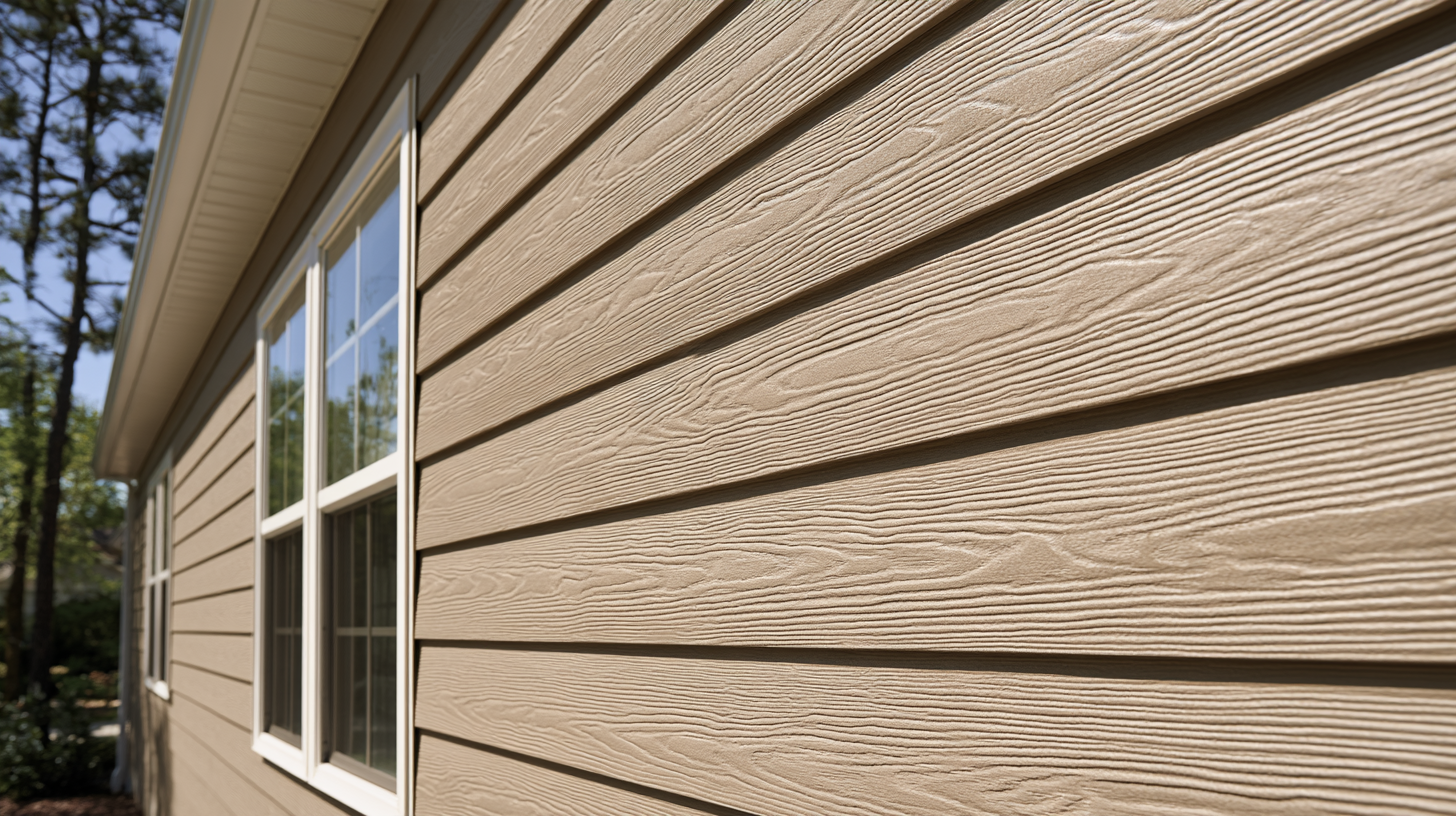
“Concrete siding” is a homeowner term, not an industry one. The product you’re picturing is fiber cement, a semi-rigid cladding that forms the weather-facing finish layer of your wall. It isn’t structural concrete, and it isn’t the cement backer board installed behind bathroom tile.
Most people land here wanting something masonry-based with the warmth of wood. Fiber cement comes in profiles and textures that suit a traditional farmhouse or a flat-roofed modern build, and it shows up on residential and commercial exteriors alike.
The recipe is straightforward: Portland cement, sand, water, and cellulose fibers, plus additives that vary by manufacturer. That mix makes it a composite, which is why it behaves like neither wood nor poured concrete.
The cellulose fibers let boards be cut and fastened without shattering and help them hold their dimensions through humidity swings. The cement brings the fire and pest resistance. Insects have nothing to eat, and the substrate itself doesn’t burn.
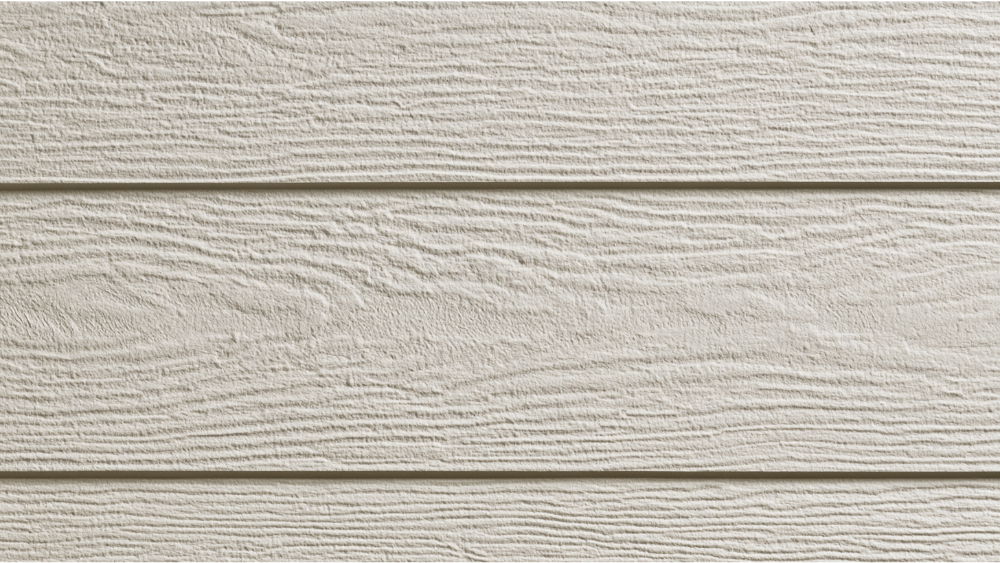
Realism comes from three things working together:
Some wood-look lines offer close to twenty factory-applied colors, a range wide enough that most homeowners find theirs without compromise. Primed-for-paint boards arrive ready to be painted on site and need that paint within the window the manufacturer specifies. Factory finishes are applied under controlled conditions and usually carry their own finish warranty.
| Profile | The look it creates | Common use |
|---|---|---|
| Horizontal lap siding (Hardie Plank) | Classic clapboard; planks range roughly 5.25″ to 12″ wide | Narrow planks read traditional; wider widths give a more contemporary look |
| Board-and-batten vertical siding (Hardie Panel plus Hardie Trim battens) | Vertical lines with strong shadow depth | Farmhouse, barn-inspired, and modern-rustic exteriors |
| Fiber cement shingles and shakes (Hardie Shingle) | Cedar-style coursing in straight or staggered edges | Gables, accent walls, coastal and cottage styles |
| Shiplap and deeper architectural profiles | Tight grooves and crisp shadow lines | Contemporary and transitional designs |
| Large-format panels | Clean, unbroken planes, run horizontally or vertically | Modern architecture and mixed-material facades |
Panels arrive as large sheets, commonly 4 feet wide by 8, 9, or 10 feet tall, and their seams have to be detailed exactly as the manufacturer specifies. Shingles are often used as an accent rather than a whole-house treatment, which keeps material cost in check while still adding character.
Coordinating trim and soffit panels matter more than homeowners expect. Thin or mismatched trim is usually the detail that breaks the illusion, no matter how good the quality of the siding is.
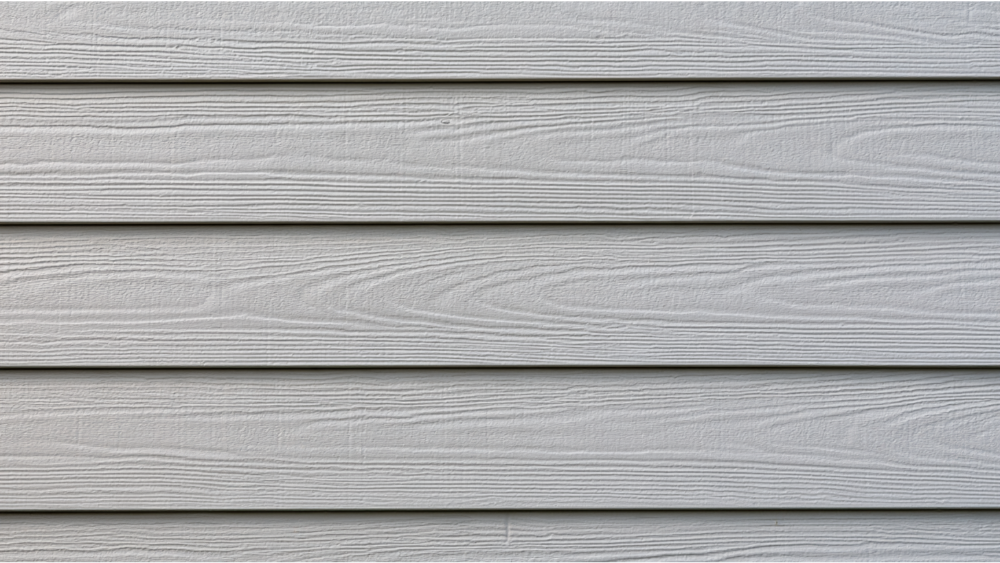
Honest answer: it depends on which wood look you’re after.
A painted cedar clapboard wall is the easiest to reproduce, and most people can’t tell the difference from the sidewalk. Naturally stained cedar or redwood is harder, and it takes a purpose-built multitone factory finish. Ordinary wood stain is not a substitute and shouldn’t be assumed compatible with any fiber cement board.
What gives it away at close range is a repeating grain pattern, sheen in direct sun, joint placement, or trim that’s too thin. Get physical samples, and look at them in sun and shade, at arm’s length and from where your car parks.
No. The correct terms are fire-resistant and ignition-resistant, never fireproof.
Many fiber cement products are tested as non-combustible under ASTM E136 and carry Class A surface-burning ratings under ASTM E84. That tests the materials, not a complete wall assembly, which is rated separately under ASTM E119. Coatings on the surface can still char even when the board underneath doesn’t burn.
FEMA includes fiber cement among noncombustible siding materials that reduce the risk of exterior ignition. NIST notes that windborne embers can land miles ahead of a wildfire, which is why siding only matters alongside vents, eaves, roofs, and decks. WUI requirements vary by jurisdiction, so verify the product, the assembly, and the locally adopted code.
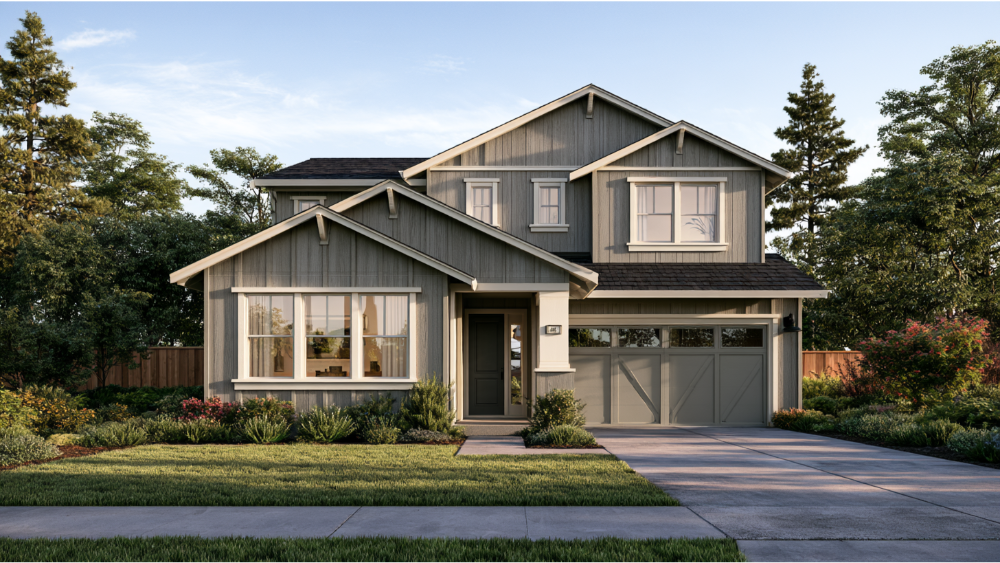
It resists rot, swelling, and termite damage, and it holds its profile through freeze-thaw cycles, driving rain, and high wind. Where cedar or spruce boards need refinishing to stay sound, fiber cement stays dimensionally stable, which is a large part of why it’s long lasting and why the finish keeps looking right.
Maintenance is light but real. James Hardie recommends gentle cleaning every 6 to 12 months depending on climate and exposure, using a garden hose with a soft cloth or nonmetal brush, and advises against high-pressure washing. Inspect caulk, butt joints, and chips once a year.
James Hardie currently offers a 30-year non-prorated limited warranty on its fiber cement products and 15 years on ColorPlus Technology finishes. A warranty period is a contractual commitment, not a guaranteed service life. Call this material low-maintenance, not maintenance-free.
It’s heavy. A 4-foot by 8-foot panel weighs over 70 pounds, so large sheets take two people and a wall structure sound enough to carry them. Until it’s fastened, the board is brittle and has to be handled carefully.
Cutting creates crystalline silica dust, which can pose health risks without proper controls. OSHA sets an action level of 25 micrograms per cubic meter and a permissible exposure limit of 50, both as eight-hour time-weighted averages. NIOSH research found a dust-collecting circular saw paired with a suitable vacuum removed at least 81% of hazardous dust under tested conditions.
Fiber cement also adds almost no insulation. ICC-ES report ESR-2290 lists roughly R-0.15 for a 5/16-inch product, so real energy gains come from what you do to the wall while the old siding is off. Repairs generally mean replacing full boards rather than patching, which keeps the finish consistent.
Cost is the other honest trade-off. Fiber cement costs more up front than other materials like vinyl, in material and labor both, because installation takes more skill, tooling, and time. Homeowners choosing fiber cement siding are weighing that first cost against decades of lower upkeep.
Here is how the advantages and trade-offs compare:
| Factor | What to expect |
|---|---|
| Rot, swelling, pests | Resists all three; holds profile through freeze-thaw, driving rain, and high wind |
| Fire performance | Many products noncombustible under ASTM E136 and Class A under ASTM E84; fire-resistant, never fireproof |
| Routine upkeep | Gentle cleaning every 6 to 12 months, no high-pressure washing; annual caulk and joint check |
| Warranty | James Hardie 30-year non-prorated limited product warranty; 15 years on ColorPlus Technology finishes |
| Insulation value | Roughly R-0.15 for a 5/16-inch product per ICC-ES ESR-2290 |
| Weight and handling | A 4-foot by 8-foot panel tops 70 pounds; brittle until fastened, so it takes two people |
| Cutting and dust | Silica dust control required; dust-collecting saw plus vacuum removed at least 81% in NIOSH testing |
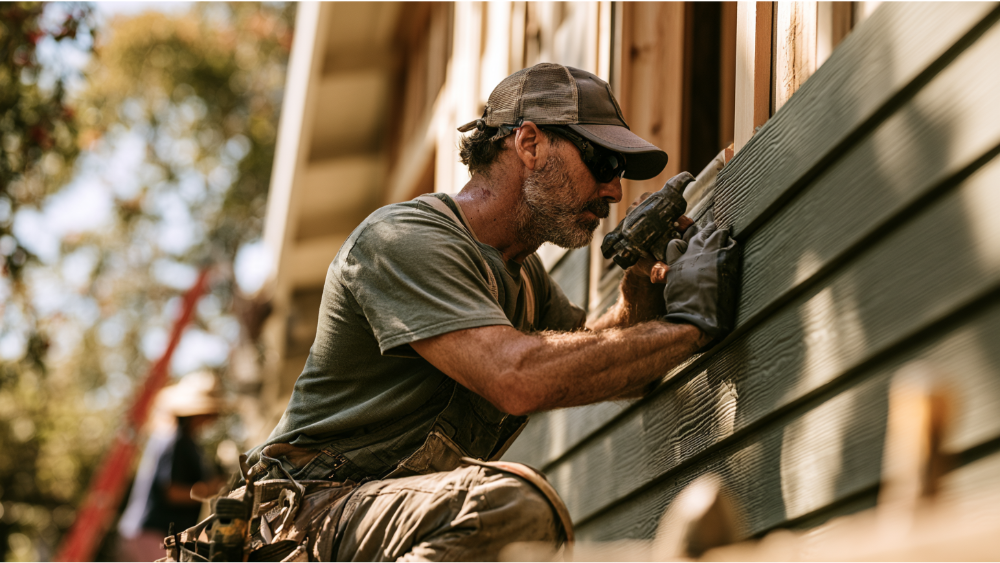
The siding is the visible layer. The wall behind it manages water: a water-resistive barrier, flashing at windows, doors, and penetrations, a drainage path, and the clearances the manufacturer requires at grade and roof lines. Get that wrong and the best material on the market won’t save the house.
Under the 2024 International Residential Code, fiber cement panels must comply with ASTM C1186 Type A, minimum Grade II (or ISO 8336 Category A, minimum Class 2). Prescriptive lap siding is capped at 12 inches wide with at least a 1¼-inch overlap, and ends without tongue-and-groove joints need an approved joint treatment. Local adoption and amendments vary, so confirm what your jurisdiction enforces.
Questions worth asking any installer:
If your house was built before 1978, EPA lead-safe renovation requirements may apply. A full siding replacement far exceeds the 20-square-foot exterior minor repair threshold.
It’s a strong fit when:
Consider alternatives when:
James Hardie is the fiber cement brand our team is certified to install. LP SmartSide is a different category, an engineered wood product, and it’s another option we install when it suits the project.
Yes, vinyl is widely available with wood-grain texture and is lighter to install. The honest trade-offs are fire performance, shallower profiles, and less convincing depth up close. We install vinyl siding too.
They’re different categories. Fiber cement siding is a cladding, not structural sheathing. The board is hard and impact-resistant on the surface but brittle in bending, so it can’t replace plywood or OSB as structure.
Weight, specialized cutting with silica dust control, and the need for professional installation. It also needs periodic gentle cleaning and caulk inspection.
Pro Superior Construction is a family owned siding and window company founded in 2013, with more than 10 years of experience and fully licensed and insured under CSLB License #986607. We’re an elite preferred James Hardie Certified Installation Company, which means the manufacturer has verified that our crews meet the highest installation standards for their products. We back our work with a 10-year labor warranty, and the discipline our multifamily projects demand carries into every home we touch.
A contractor will inspect your home, review the condition of the walls, and help you compare wood-look profiles and finishes side by side. Request a free, no-obligation estimate through our form, or call us at (916) 474-4483.
