

For La Cresta Village homeowners, Pro Superior Construction installs, replaces, and repairs siding and windows with the credentials that matter most: we are an Elite Preferred James Hardie Certified Installation Company, we hold CSLB License #986607, and we are fully licensed and insured. If you are deciding who to hire in La Cresta Village, we are a family owned siding specialist serving the village from our Rocklin office, working on custom-home elevations with the care a larger exterior project deserves. Homeowners searching for siding contractors near me want a team that shows up with proof, and that is exactly what we lead with.
We have done this since 2013, and that longevity shows up in the details most homeowners never see until something goes wrong: flashing, weather-resistant barriers, and the condition of the wood behind your exterior siding. Those hidden layers are the real reason a siding job lasts or fails, and they are also the first place a rushed crew cuts corners. Before you trust any contractor with your home, verify their CSLB license, and look for a manufacturer certification like ours that holds the installer to the highest standards. When you compare siding contractors side by side, the difference is rarely the boards on the wall. It is the training, the documentation, and the willingness to show you proof.
Your first step costs nothing. We offer a free, no-obligation estimate, and a contractor will inspect your home and assess exactly what it needs before you commit to anything. Call us at (916) 474-4483 or request your free estimate online.
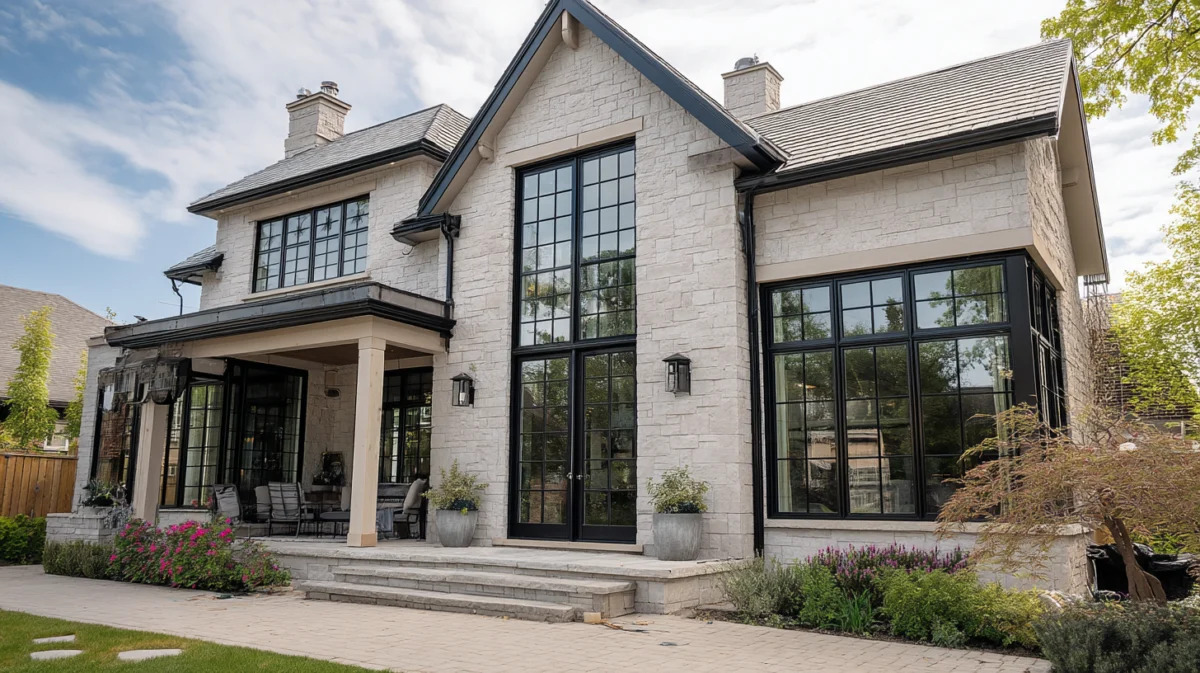
Our Siding Services in La Cresta Village
We handle the full scope of exterior work on La Cresta Village homes: new siding installation, full siding replacement, targeted siding repair, fire-resistant siding, and window installation and replacement. Because the village is built out with larger custom homes, often with mixed-material walls where stucco, brick veneer, and wood siding meet on the same elevation, we plan each project around your specific home rather than a one-size approach. No two elevations in the village are identical, and a siding plan that ignores that is a plan that creates problems later. As a focused exterior siding contractor, our siding services cover every stage from the first inspection to the final walkthrough.
Quality siding does two jobs at once. It protects the structure behind it from moisture, pests, and the kind of slow damage that turns into expensive repairs, and it gives your home a fresh look that holds its value. Proper siding installation is what keeps water out of the wall assembly, which is why we inspect substrate and flashing rather than simply fastening new boards over old problems. A siding crew that skips that inspection is building a cosmetic shell over whatever is already failing underneath. Full replacements require a county permit for the scope involved, and when old siding has to come off, we remove and dispose of it as part of the job. You can see more of what we do on our main siding service page.
James Hardie Fiber Cement Siding Installation
James Hardie fiber cement siding is the manufacturer-recommended siding we install most, and our Elite Preferred James Hardie certification means our crews are trained and accountable to the company’s own installation standards. Fiber cement is a dense, engineered board made from cement, sand, and cellulose fiber. In plain terms, it looks like wood but resists the problems wood runs into: it stands up to intense UV radiation and seasonal moisture, and it does not feed rot or insects the way older cladding can. For a village sitting in a climate that swings from dry summer heat to wet winters, that stability is exactly what you want behind your home’s finish.
Hardie fiber cement siding also brings a predictable warranty structure, which matters when you are investing in an exterior that should outlast most other improvements you make. James Hardie fiber cement is noncombustible and carries a Class A fire rating, which ties directly into the wildfire preparation conversation that so many foothill and hillside homeowners are having. We work across the Hardie siding line, including Hardie Plank lap siding, Hardie Panel vertical siding, Hardie Shingle siding, Hardie Trim boards and batten, Hardie Soffit panels in vented and non-vented profiles, and the Hardie Reveal panel system for a more contemporary look. ColorPlus Technology factory finishes hold their color far longer than site-applied paint, and they resist the chalking and fading that turn a bright elevation dull after a few seasons in the sun.
The right choice depends on your home’s architectural style and its fire-zone requirements, and we help you match the profile and finish to the look you want. A traditional two-story custom home may call for a lap profile with substantial trim, while a cleaner modern elevation might lean on vertical panels and architectural metal trim. James Hardie siding gives us the range to serve both without compromising on protection, and that is a large part of why hardie board siding is our flagship recommendation.
Siding Replacement & New Siding Installation
Full siding replacement is a tear-off-to-finish process, not a cover-up. We remove the existing siding, dispose of it, inspect the substrate, repair what we find, install a weather-resistant barrier, integrate flashing at every penetration and transition, and finish with trim, soffits, and paint where specified. A detailed estimate should spell out each of those line items, including removal, materials, and water protection, so you know exactly what you are paying for. That kind of upfront pricing is how a homeowner tells the difference between a thorough bid and one that hides the expensive parts until the work is underway.
Many La Cresta Village homes are now more than thirty years old. On a house of that age, the original barrier and flashing may be at the end of their service life even when the siding still looks presentable. New siding installed over a failing weather envelope solves nothing. Full replacement lets us correct hidden issues and rebuild the whole weather envelope, which is the part that actually keeps repair bills off your doorstep. Maintaining a waterproof exterior is the single most reliable way to avoid expensive structural work later, and it is also the moment to upgrade the look of the home with fresh profiles, trim details, and factory color that improve curb appeal in a way a repaint never quite matches and give you a crisp looking exterior from the street.
New siding installation is also a natural opportunity to improve your home’s energy efficiency. When the walls are open, we can add exterior insulation or a quality house wrap that tightens the thermal envelope, which pays off through both the summer heat and the colder months. Pairing new siding with that kind of upgrade means you get protection, appearance, and lower energy costs out of a single project rather than three separate ones.

Siding Repair & Dry Rot Repair
Targeted repairs fix damage before it spreads into the structure. Cracked, dented, or loose siding lets water in, and water behind cladding leads to dry rot, damaged sheathing, and mold that costs far more to fix than the siding itself. When we handle a siding repair, we inspect the concealed conditions around the damaged siding so we are not patching over a problem that is still active underneath. A patch that looks clean on the surface but seals moisture inside the wall is worse than no repair at all. If the wall calls for dry rot repair, we address the rot repair at its source rather than covering it.
Common triggers for siding repair in the village include impact damage, sprinkler overspray that keeps a lower course wet, failed caulk at trim joints, and the slow splitting that older wood siding shows after decades in the sun. Each of those has a different fix, and we match the repair to the cause rather than defaulting to a one-size patch. If you only need a section of damaged siding addressed, we can do that. To qualify for our workmanship warranty, we ask to complete at least one full wall, which lets us tie in flashing and barriers correctly rather than leaving a seam in the middle of a run that could fail later. That one-wall standard is not about selling you more work. It is the only way to guarantee the repair integrates into a watertight system instead of becoming the next weak point.
Siding Options and Materials
We install several siding materials and help you weigh the trade-offs for your home and budget. The best material for your neighbor’s house is not automatically the best one for yours, which is why we walk through the real differences rather than steering you toward a single product.
- Fiber cement (James Hardie): Our most-recommended material. Noncombustible, resists UV and moisture, holds factory color, and suits the custom-home elevations common here. Hardie fiber cement siding is the durable siding choice most homeowners in a wildfire-aware area land on once they see the full picture.
- Vinyl and insulated vinyl siding: Vinyl siding can last for decades with minimal maintenance and never needs repainting; the insulated version adds a thermal layer behind the panel that supports your home’s energy efficiency.
- Wood siding: Classic wood siding delivers a traditional look that fits many La Cresta elevations, with a maintenance and repainting commitment to keep it protected. If you love the warmth of real wood siding, we are happy to install and maintain it correctly.
- LP SmartSide: Engineered wood siding that offers a wood appearance with improved durability, already approved in the village on a recent project.
- Mobile home siding: Material and installation suited to manufactured-home exteriors.
Each material carries a different balance of durability, maintenance, and cost, and we lay those out plainly during your estimate so the choice is yours. If you are drawn to the look of classic wood siding but want less upkeep, engineered wood or fiber cement can give you that low maintenance appearance with far less work, and we will say so directly rather than upselling for its own sake.
Fire-Resistant / Ignition-Resistant (WUI) Siding
Fire-resistant siding is one of the most practical steps you can take to harden a La Cresta Village home, and El Dorado County specifically recommends noncombustible siding such as fiber cement as part of a home-hardening plan. This is a Wildland-Urban Interface concern, meaning areas where homes sit near open and vegetated land, and it is worth taking seriously without letting it drive you into panic. The goal is not fear. It is a few concrete decisions that measurably lower your home’s exposure.
We never call any siding fireproof, because no material is. What we install is fire-resistant, ignition-resistant cladding built to reduce how readily an exterior can catch and carry fire. Embers, not walls of flame, are what ignite most homes during a wildfire, and a noncombustible exterior like James Hardie fiber cement gives those embers far less to work with. Safety and design are not in conflict here. Fiber cement comes in a wide selection of textures, profiles, trims, and factory colors, so the same material that improves your home’s resilience can also sharpen its look and its curb appeal. Because requirements can vary address by address, we recommend confirming your parcel’s fire-zone designation, and we help you do that before we finalize a plan.

Window Installation & Replacement
We install and replace windows from the brands homeowners know and trust, including Milgard, Andersen, Anlin, Marvin, Pella, Alside, Amsco, Lindsay, and Plygem. New windows paired with new siding seal drafts and improve your home’s energy efficiency, and they refresh the face of the house at the same time. A tired, fogged window set can age an otherwise sharp elevation, so replacing glass while the siding goes up is one of the highest-impact curb appeal moves available.
Planning windows alongside siding is the efficient way to do it. Both depend on the same flashing, trim, and weather-resistant barrier, so coordinating them means one integrated, watertight detail instead of two that have to meet later. It also means one crew, one schedule, and one set of approvals rather than two disruptive projects spaced months apart. In El Dorado County, a same-size, same-configuration window replacement does not require a building permit, though the finished work still has to meet current glazing, egress, light, and ventilation rules. Changing an opening’s size or framing is a different matter, and we confirm that for you before work begins.
Why La Cresta Village Homeowners Choose Us
Homeowners here choose us because we lead with proof, not promises, and because we understand what a project in a 103-parcel custom-home village actually involves. California requires contractors to hold an active license for any home improvement work over $500, so start by confirming that any company you consider carries general liability insurance and workers’ compensation coverage and an active CSLB license. We do, and we are glad to verify it. A contractor who hesitates when you ask for a license number is answering the question for you.
Beyond the paperwork, we are a family owned company that treats your home as more than a line on a schedule. We know exterior changes in La Cresta Village can be reviewed under unit-specific CC&Rs by the Community Services District Design Review Committee, and we know the custom-home scale here means individualized estimating rather than a flat quote. That local awareness is what a generic contractor page cannot show you. Many of the siding contractors a homeowner might call have never navigated a design-review submission in the village, and the gap shows up as delays and surprise corrections once work begins. Read recent online reviews, compare written estimates, and you will see the pattern. Request your free, no-obligation estimate and judge us on the detail.
Licensed, Insured & James Hardie Certified
We hold CSLB License #986607, we are fully licensed and insured, we are an Elite Preferred James Hardie Certified Installation Company, and we are BBB accredited with an A+ grade. The James Hardie certification is not a sticker. It is a manufacturer-granted credential that signals our team meets the highest installation standards, and it means accountability: Hardie backs the installation standards we are trained to follow, so you are not asked to simply take our word for the quality of the work. Not every company that installs Hardie siding carries this certification, and the distinction matters most on the details you cannot see once the walls are closed up: fastener spacing, clearances, and flashing integration done exactly to specification. Expert siding installation lives in those details, and our detail oriented crews treat them as the heart of the job, not an afterthought.
Ten-Year Labor Warranty & Transparent Pricing
We stand behind our installation with a ten-year labor warranty, on top of the manufacturer warranties that cover the materials. Manufacturer coverage commonly runs from 30 years to a lifetime depending on the product, while a typical workmanship warranty lasts just one year, so a decade of labor coverage is a meaningful difference. Look for comprehensive warranties that cover both materials and workmanship, and read what ours includes. A long warranty is only as good as the company standing behind it, which is where our years in business and local track record come back into the conversation.
On price, we aim for an honest, fair price rather than the lowest bid. We prize honest, quality work over quick turnarounds, and we would rather do the job right than rush it to hit a cheap number. Upfront pricing means every line of your estimate is spelled out, from removal and disposal to the weather-resistant barrier to the finish work, so there are no vague allowances hiding a markup. Be cautious of lowball bids, which often signal corners cut or hidden costs that surface later. Financing options are available if they help your plan.
Built on Complex Projects, Delivered to Your Home
Founded in 2013, we have more than ten years of siding and window experience and have helped hundreds of customers with everything from targeted repairs to a full custom-home elevation. Alongside residential work, we take on large multifamily and commercial projects, and that matters to you for one reason: the capacity, crew discipline, and quality workmanship those jobs demand come straight back into the work we do on a single home. A crew that holds its standards across a multi-building job does not lower them for a single custom home, and each of those jobs runs under a dedicated project manager who keeps the schedule and the standards aligned. We are relationship-first, delivering outstanding work and excellent customer service whether the job is a one-wall repair or a complete re-side. The job isn’t done until you are satisfied.
How Your La Cresta Village Siding Project Works
Your siding project moves through a clear sequence from the first call to the final walkthrough, and we never rush a step to pad a schedule. Thoroughness is the point. We also handle the local approval questions for you, checking whether your work needs El Dorado County review, Community Services District design review, or both, and we plan for the possibility of concealed damage rather than pretending it cannot happen. Most siding projects run one to two weeks of active installation once materials and approvals are ready, though your home’s size, access, and scope set the real timeline. We would rather give you an honest window than a flattering one we cannot hold.
1. Free On-Site Inspection & Estimate
A contractor comes to your home, inspects it, and assesses exactly what it needs, including flashing, substrate, and concealed conditions behind the existing siding. You receive an itemized written scope that separates known work from a clear change-order process for hidden damage like dry rot or failed sheathing. This is also where we talk through your siding options in person, so you can see profiles and colors against your actual home rather than guessing from a brochure. This free consultation is yours with no strings attached. Ask any contractor how they handle unexpected damage during a job; we answer that in writing before you sign. Reach us through our contact page to set it up. Free siding estimates are the low-risk way to start, and nothing about the visit obligates you to proceed.
2. Materials, Colors & Design Review
We help you choose material, profile, trim, and finish from high quality materials, and we match those choices to your home’s style. At this stage we identify your La Cresta Village unit, review the applicable CC&Rs, and explain who handles the design-review submission to the Community Services District and any county filings. Getting the material approved and the look right happens here, before anything is ordered. If you are weighing fiber cement against wood siding or vinyl siding, this is the moment we lay out the maintenance and cost differences so the decision is informed rather than rushed.
3. Installation by Our Certified Team
Our certified crews perform the tear-off, install the weather-resistant barrier, integrate flashing at every transition, and install your siding to manufacturer standards. We paint where the scope calls for it and clean the site as we go, because a tidy job site is part of respecting your property, not an afterthought. Homeowners regularly tell us our crews are incredibly respectful of their property and do an amazing job keeping the work area clean. This is also where exterior insulation or a quality house wrap can be added to improve your home’s energy efficiency and year-round comfort. For fiber cement, correct expansion clearances and fastener placement at this stage are what let the warranty hold and the walls perform through decades of heat and moisture.
4. Final Walkthrough — The Job Isn’t Done Until You’re Satisfied
We walk the finished project with you, inspect the details together, and address anything that does not meet the standard we set. We look at trim lines, caulk joints, paint coverage, and the transitions where materials meet, because that is where a rushed job shows itself. That focus is how we deliver an excellent job on the entire project, every time. Completion is not the finish line. Your satisfaction is.
Serving La Cresta Village: Local Knowledge That Protects Your Project
La Cresta Village is a compact, established residential community in El Dorado County, sitting at roughly 932 feet of elevation, and knowing it specifically is what lets us protect a project here. The village was organized when its landscape and lighting district formed in 1988 and was annexed in 1991, and today it holds 103 assessable parcels. Its maintained entry feature stands at Wilson Boulevard and Ridgeview Drive, with community landscaping running along Wilson Boulevard, plus fencing, a walkway, an entry wall, and a streetlight kept up through the assessment district.
We orient our work around the village’s real street network, including Wilson Boulevard, Lago Vista Drive, Roble Court, Alta Sierra Way, Santa Maria Way, Barcelona Drive, Santa Cruz Court, and Montridge Way. That is not decoration. Knowing the layout, the slopes, and the housing patterns is how we plan access and staging before a single board comes off your wall. On a sloped, view-oriented lot, where the material gets staged and how the crew reaches an upper gable changes the day-to-day of the job, and planning it early keeps your project moving.
The Homes We Work On Here
La Cresta Village is a late-1980s and early-1990s custom-home community, not a uniform tract. Sampled homes show the pattern: a Santa Cruz Court home from 1991 at about 2,406 square feet on roughly a third of an acre, a Seville Court home from 1990 at about 3,453 square feet, and a two-story Lago Vista Drive custom home from 1992 at about 3,822 square feet on more than half an acre. These are one- and two-story houses, generally 2,400 to 3,800 square feet, on lots of 0.3 to 0.56 acre.
Many of these elevations mix exterior materials, with stucco, wood siding, brick veneer, and engineered siding meeting on the same wall. A good share of these homes are now past thirty years old, which means the original exterior siding and the barrier behind it are often reaching the end of their useful life at the same time. That combination is exactly why we inspect substrate and flashing closely before quoting a scope, because the materials behind the siding, not just the siding itself, determine whether a project lasts. On a mixed-material elevation, the transitions where stucco meets siding are the most common failure points, and they are the first thing we examine.
Terrain, Heat & Wildfire Preparation
At about 932 feet, with view-oriented and sloped lots common throughout the village, siding work here often means multi-story walls and downhill elevations that need deliberate staging and access planning. We account for that in the estimate rather than discovering it on day one. A downhill wall that reads as one story from the street can be two full stories at the back, and pricing that honestly up front is part of our upfront pricing commitment.
The climate drives material decisions too. Summer heat and strong UV ask for stable materials, proper expansion clearances, and manufacturer-compliant installation, while seasonal moisture puts the emphasis on flashing, barrier integration, and clearances above soil and hardscape. Wood siding in this climate demands a committed repainting schedule to stay protected, which is one reason many homeowners here look hard at fiber cement for its factory finish and lower upkeep. For wildfire, El Dorado County recommends noncombustible siding, including fiber cement, as part of home hardening. We frame that as something you can act on, not something to fear. Choosing an ignition-resistant exterior is one concrete, lasting step toward a more resilient home, and it does not cost you curb appeal.
County Permits and La Cresta Design Review
Projects here can run on two tracks, and we manage both. For building permits, La Cresta Village is served by the El Dorado County Planning and Building Department, Building Division, with its primary office at 330 Fair Lane in Placerville. Separately, your exterior changes may be reviewed under your unit’s CC&Rs by the Community Services District Design Review Committee.
This is real, not hypothetical. La Cresta Village Unit 3 CC&Rs list traditional veneer and wood siding materials and permit other siding materials with committee approval. In June 2025, a Unit 3 exterior package that included LP SmartSide siding and Andersen 100 Series windows was approved, except for the originally proposed roof material. That example tells you two useful things: siding options beyond the traditional list are achievable here, and the committee reviews the full exterior package, not just the siding. Depending on your address, scope, and unit, your project may need county review, Community Services District design approval, or both, and we confirm the applicable requirements before work begins so the approval process does not stall your installation.
We Travel to La Cresta Village from Our Rocklin Office
We are not based in the village. We serve La Cresta Village from our office at 4130 Citrus Ave, Suite 17, Rocklin, CA 95677, as part of the broader Bay Area and Northern California region we cover, which includes communities such as Fair Oaks, Elk Grove, and the Placer County towns closer to home, and we confirm scheduling and routing during the estimate so you know what to expect. The point is simple: the village is squarely within the area we serve, and a project here gets the same crew and standards as any job closer to home. Homeowners across the Bay Area and the foothills call us for the same reason, which is a specialist focus on siding and windows rather than a general contractor spreading attention across a dozen trades.
Frequently Asked Questions
What is the average cost of a siding job?
Cost depends on your home’s size, the material you choose, access to the walls, and any concealed repairs we find, so we do not quote blind figures. As general industry context, siding replacement commonly runs roughly $4 to $16 per square foot, but that range spans everything from basic vinyl siding to premium Hardie fiber cement siding and does not account for a specific home’s trim, roof-wall intersections, or hidden damage. We give you an accurate number after a free on-site inspection, and we would caution against any contractor offering a firm price sight unseen, since lowball bids often hide costs that reappear later.
How much does siding cost for a 3,000 sq ft house?
Do I need La Cresta design review before replacing my siding?
Does El Dorado County require a permit for my window or siding work?
Can I replace my wood siding with James Hardie in La Cresta Village?
How do you check for dry rot or damaged sheathing behind the siding?
Get Your Free La Cresta Village Siding Estimate
The best time to plan an exterior project is before the driest part of the year, so choosing fire-resistant siding becomes preparation rather than a scramble. New siding protects the structure, sharpens your home’s curb appeal, and can meaningfully raise its value, while modern materials help hold down energy costs through the heat and the cold alike by improving your home’s energy efficiency. Whether you are drawn to James Hardie fiber cement for its resilience, the warmth of classic wood siding, or the low maintenance of vinyl siding, we will walk you through the siding options honestly and help you land on the right one to improve curb appeal and protection on your home.
There is no risk in asking. Call us at (916) 474-4483, Monday through Friday, 9 AM to 7 PM, or request a free, no-obligation estimate through our siding service page or contact page. A contractor will inspect your home, assess exactly what it needs, and lay out your options in writing, so the next move is entirely yours.


