
Pro Superior Construction installs, replaces, and repairs siding for South Natomas homes and multifamily properties, and we are a James Hardie Elite Preferred Certified Installation Company holding CSLB License #986607. If you want the short answer on who to hire here and why: choose one of the siding contractors who is fully licensed and insured, carries a manufacturer certification, and stands behind the work in writing. We do all three, and every siding installation we complete is backed by a 10-year labor warranty. When homeowners search for siding contractors near me who will actually show up, do the job right, and still be around in a decade if something needs attention, that combination is what they are looking for.
We have served homeowners across Northern California since 2013, which puts more than 10 years of hands-on experience behind every siding project. South Natomas was built out mostly as residential subdivisions between 1950 and 1980, with a few pockets dating to the 1920s, so a lot of homes here are reaching the age where original exterior siding, trim, and flashing deserve a close look. We bring that look, and a clear plan, before any work begins. Siding is not a product you buy and forget; it is the layer that keeps your wall assembly dry and your home comfortable, and on a house that has weathered forty or more years of summers and winters, the condition of that exterior siding tells us a great deal before we ever pull out a tape measure.
Before you sign with anyone, verify their CSLB license is active, and favor a team with manufacturer certification. That certification is third-party proof that installers meet the standards the material maker requires, not a slogan. It is the difference between a product warranty that holds and one that gets voided by a bad install. Plenty of siding contractors can hang a board that looks fine on day one. Far fewer install it the way the manufacturer specifies, with the correct fastener type, spacing, clearance, and moisture detailing that keep the warranty intact and the wall sound for the long haul.
Get a free siding estimate. A contractor will inspect your home and assess exactly what it needs. Contact us today to schedule a free, no-obligation visit.
Our Siding Services in South Natomas
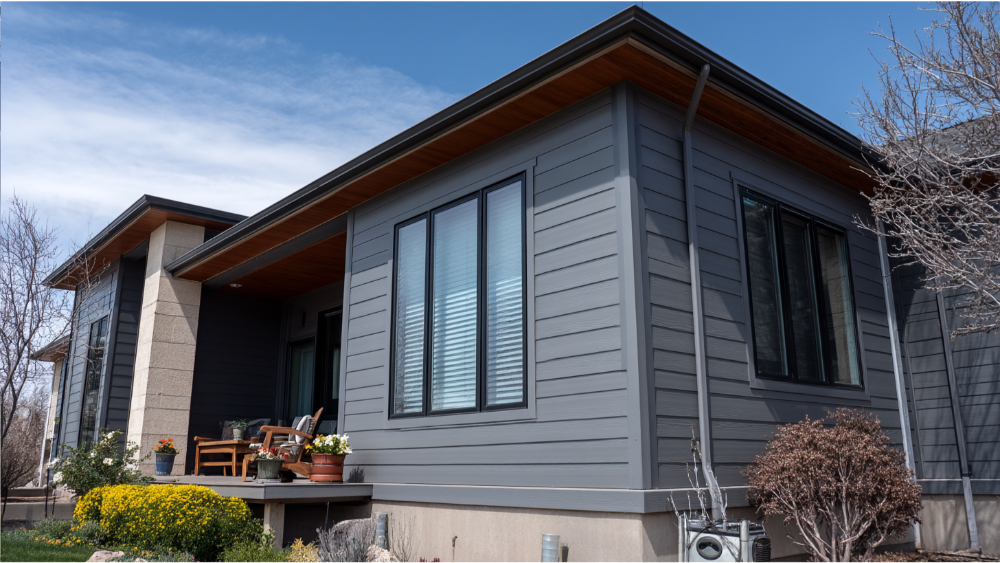
We handle siding on detached homes, duplexes, townhomes, and the garden-style apartment properties that make up a large share of South Natomas housing. Forty-three percent of homes in the area are part of multi-unit developments, many of them near Garden Highway and I-80, so we are set up to handle both a single family home and a full apartment elevation to the same standard. Whether you need new siding installation on a home that has never been touched, a full replacement on a property that has aged past its original material, or a focused siding repair after storm damage, the same crew discipline and the same manufacturer standards apply across all of our siding projects.
Every option below pairs protection with how your home looks. Quality siding keeps water and weather out of the wall and refreshes your home’s curb appeal at the same time. We walk you through the pros and cons of each material during the inspection, because the right choice depends on your home, not on what is easiest for us to install. Each siding material also carries its own rules for fastening and moisture-barrier sequencing, and following those rules correctly is what makes the finished wall last. A homeowner comparing fiber cement siding, vinyl siding, and classic wood siding deserves a straight explanation of how each one behaves on a South Natomas wall, not a sales push toward whichever product moves fastest. Those are the core siding options we lay out at the kitchen table.
James Hardie Fiber Cement Siding Installation
James Hardie fiber cement siding is our priority material, and as an Elite Preferred Certified installer we are held to the manufacturer’s highest standards. Fiber cement is a dense, engineered board made from sand, cement, and cellulose fiber, and it resists the sun, moisture, and pests that wear down softer materials. That composition is why James Hardie fiber cement does not swell, rot, or feed termites the way organic materials can, and why it holds paint and factory finishes for so long. It also carries a Class A fire rating, which matters for wildfire resilience. We handle expert siding installation across the full Hardie siding line: Hardie Plank lap siding, Hardie Panel vertical siding, Hardie Shingle, board and batten profiles using Hardie Trim and batten boards, and ColorPlus Technology factory finishes that bake the color on rather than painting it in the field. Hardie board siding is a major reason homeowners seek us out by name, and James Hardie siding remains the first material we recommend when a homeowner wants both longevity and curb appeal in one install.
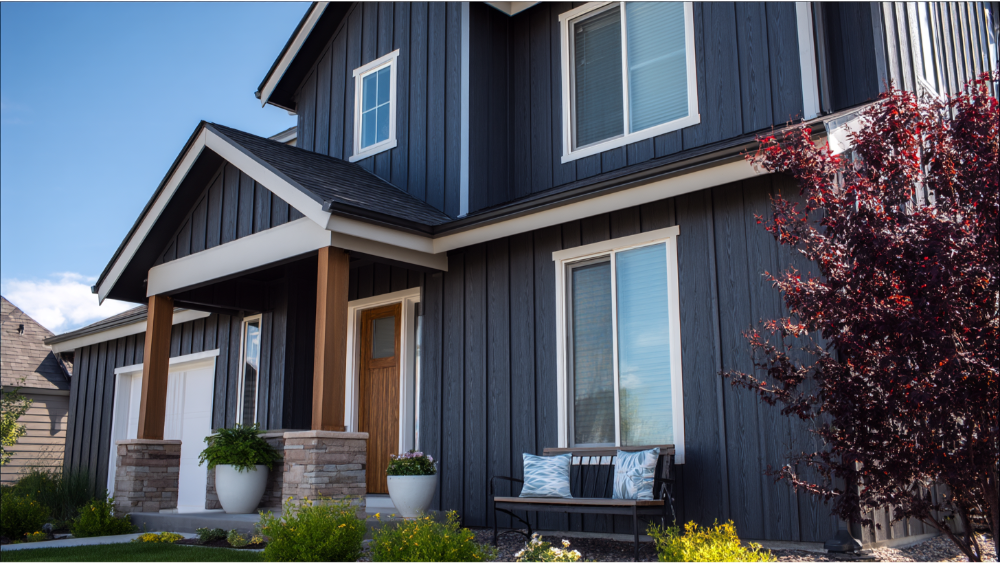
Each of those profiles serves a different look. Lap siding gives you the familiar horizontal line that reads as a classic single family home and suits most of the detached houses in the area. Board and batten runs vertically with raised battens over the seams, a profile that works beautifully on newer infill homes and on accent gables where you want a bit of farmhouse-leaning character. Shingle panels bring texture to a dormer or an entry wall. We help you mix these intentionally so the finished exterior siding looks designed rather than defaulted, with the attention to detail that keeps the finished wall crisp.
James Hardie siding suits South Natomas well because our summers put walls under long, hot, UV-heavy exposure. Hardie fiber cement siding holds its shape and finish through that heat far better than many alternatives, and it is engineered for the climate zones James Hardie assigns across the country, so the specific James Hardie siding products we order are matched to our regional conditions. An exterior siding contractor should recommend products rated for prolonged thermal exposure, and the right siding materials are what let a south- or west-facing wall survive season after season of direct sun without warping or fading early. There is also a protection story worth naming: fiber cement is a noncombustible material, which is why homeowners who care about wildfire resilience across the broader Bay Area and inland valleys gravitate toward it. We install fire-resistant, ignition-resistant siding built to meet Wildland-Urban Interface, or WUI, building standards where a property calls for it, protecting your home without compromising on style.
Vinyl, Wood, and LP SmartSide Siding Options
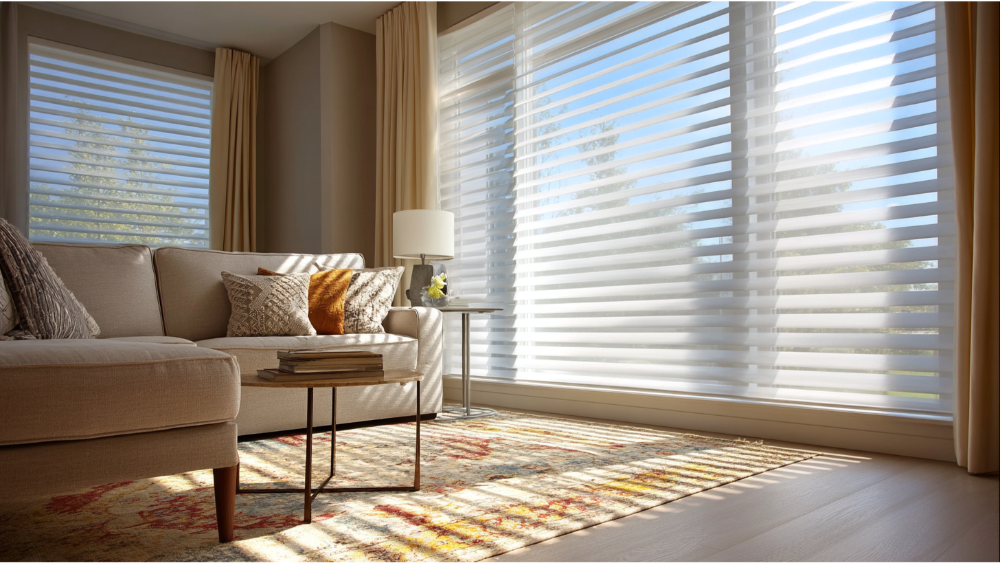
Beyond fiber cement siding, we install vinyl, insulated vinyl siding, classic wood siding, and LP SmartSide engineered wood so you can match your home’s style and your budget. These siding options give you real range, and new siding also seals drafts, which improves your home’s energy efficiency and can make a home easier to heat and cool through both the hot stretch of summer and the damp winter months. Here is how the siding materials compare for a South Natomas home:
- Vinyl siding: Low maintenance and budget-friendly, with no painting required and a wide range of colors molded through the panel. A vinyl re-side can add meaningful resale value, often cited around $15,490 nationally, and insulated vinyl siding adds a thermal layer behind the panel that helps your home’s energy efficiency. Vinyl is a strong pick for owners who want a clean, low maintenance look without an ongoing paint schedule.
- Wood siding: Classic wood siding delivers the most natural look and the warmest texture of any material, which is why it still appeals to owners restoring an older home’s character. The trade-off is upkeep. Wood siding needs regular sealing and repainting to hold up under our hot summers and wet winters, and neglecting that cycle is how wood siding opens the door to moisture and rot. For owners who want that grain without the maintenance, we usually point them toward fiber cement or engineered wood instead.
- LP SmartSide engineered wood: The look of real wood grain with better resistance to moisture and impact than traditional wood siding, and noticeably less upkeep. It is a sensible middle ground for a homeowner who loves the warmth of wood but does not want its maintenance demands.
We walk through maintenance, appearance, sun exposure, and cost together so the siding material fits both your wall and how long you plan to stay. There is no single right answer across every house. A durable siding choice for a sun-blasted west elevation may differ from what makes sense on a shaded north wall, and we would rather spend the time matching the material to the conditions than hand you a one-size catalog. Some owners also ask about brick veneer; while it has its place, siding gives most homes here a better balance of cost, speed, and curb appeal.
Siding Repair and Dry Rot Repair
Not every home needs a full replacement, and we will tell you honestly when targeted repairs make more sense than a full re-side. Cracked or damaged siding opens a path for water into the wall, dented panels only get worse if left alone, and weather-damaged sections need prompt attention before a small problem becomes an expensive one. We look for the cause, not just the symptom. A split board low on a wall, for instance, often traces back to splashback or a failed flashing detail higher up, and simply swapping that board without addressing the source would leave the real problem in place. Targeted repairs done this way save you money without compromising the wall.
A core part of our approach is checking for concealed moisture. Damaged siding you can see on the surface often points to water that has already gotten behind the material, so identifying that underlying issue is part of how we scope a repair. On fiber cement siding and wood siding alike, the failure you notice is frequently the end of a longer chain that started at a penetration, a transition, or an aging weather barrier. Dry rot repair and broader rot repair are a regular part of this work, since soft, water-damaged framing has to be corrected before new material goes on. Because our workmanship warranty depends on a sound, complete installation, we require at least one full wall of siding work for repair warranty eligibility rather than patching a few boards in isolation. That standard protects you as much as it protects us, because a true wall-section repair lets us correct the moisture path rather than cosmetically cover it.
Siding Replacement for Homes and Multifamily Properties
A full replacement restores both the weather protection and the curb appeal of an aging home or apartment property. Replacement siding commonly runs between $4 and $16 per square foot as an industry range, which is why measured scope matters so much; the siding material, the tear-off, and any concealed repairs all move the number. A straightforward like-for-like vinyl re-side sits toward the lower end, while a full James Hardie siding installation with new trim, factory finishes, and substrate repairs sits higher. The only way to know where your project lands is a measured inspection, which is exactly what the free siding estimate provides.
With 43 percent of South Natomas homes sitting in multi-unit developments, we are used to the realities of larger siding projects. We coordinate around occupied units, keep the appearance consistent across every elevation, and apply the same repeatable siding installation standard to a twenty-unit garden complex that we do to a single detached home. A dedicated project manager keeps each phase organized so nothing falls through the cracks. That capacity is the point: the discipline a multifamily job demands, phasing, access coordination, consistent color and profile across dozens of walls, is the same discipline we bring to your house. You are not getting a scaled-down version of our standard because your project is smaller. You are getting the same quality siding and workmanship, applied to one home, whether you want a full replacement or a partial re-side.
Window Installation and Replacement
Replacement windows pair naturally with a siding project, and doing both at once means the flashing and weather barrier are integrated correctly behind the new wall. New windows also seal drafts and improve a home’s energy efficiency, which is a meaningful comfort gain during our hot summers when older single-pane units bleed cooled air and drive up energy costs. We install trusted window brands including Milgard, Andersen, Anlin, Marvin, Pella, Alside, Amsco, Lindsay, and Plygem, so you can match performance and style to your home. When exterior siding comes off, it is the ideal moment to upgrade the openings underneath, because the installer can flash and seal each window into the wall assembly the right way rather than working around siding that is staying in place.
Why South Natomas Homeowners Choose Us
We lead with proof, not promises. Pro Superior Construction holds CSLB License #986607, is fully licensed and insured, and is a James Hardie Elite Preferred Certified Installation Company. We carry workers’ compensation and general liability insurance, which protects you if anything goes wrong on your property, and verifying that coverage is one of the first things any homeowner should confirm before hiring any of the siding contractors they are comparing.
That James Hardie certification is worth understanding rather than skimming past. It is a manufacturer-backed credential, which means James Hardie itself holds us accountable to its highest installation standards. Certification is third-party validation that our team meets those standards, and it is what keeps the product warranty intact. A product warranty only protects you if the James Hardie siding was installed the way the maker requires. The Elite Preferred tier is the top certification level James Hardie grants, and reaching it means the manufacturer has reviewed our work and our installation practices, not just taken our word for it.
Our record backs it up. We have been in business since 2013, more than 10 years, and hold a BBB A+ accreditation. Per BuildZoom, we rank in the top 2% of California’s licensed contractors, a reflection of the volume and quality of permitted work we have completed. The feedback we hear most often, that our crews are incredibly respectful and did an amazing job, is the kind of excellent customer service we work to earn on every project. Our siding installations come with a 10-year labor warranty, so the coverage you get spans both material defects, through the manufacturer, and the workmanship of our install. Many siding contractors offer only a one-year workmanship warranty; ours runs ten, because warranties are how we protect the investment you are making in your home.
When you compare contractors, read recent reviews and watch for patterns in how they communicate, keep a site clean, and follow through. We also want you to notice what a trustworthy, detail oriented contractor does not do: pressure you to sign on the spot or demand a large payment up front. We do neither. A company that is confident in its work does not need high-pressure tactics to earn your signature, and a company that respects its clients does not treat your deposit as working capital.
We are family owned, and that shapes how we work. We are not too big to care about a single wall of siding repair, and we are not a faceless crew that shows up, rushes, and disappears. We build a relationship with every client and treat your home as if it were our own. If you have been burned by a contractor before, we understand the hesitation, and we believe our values and the way we work will set us apart from companies you may have dealt with in the past. Customer service is our highest priority, and we pride ourselves on honest, quality work over quick turnarounds. The job is not done until you are satisfied.
See the credentials in action. A free inspection comes with no obligation, and a contractor will assess exactly what your home needs. Explore our siding services or reach out to get started.
Honest, Competitive Pricing Without Surprise Charges
You get a written estimate before any work begins, and it spells out the scope so there are no surprises later. We put our pricing on paper because a vague verbal number is how projects go sideways. The free inspection and the estimate that follows document each of these:
- Our repair-versus-replacement recommendation
- Measured scope, whether it is one wall or the whole home
- Tear-off and disposal of the old material
- Weather barrier and flashing work
- Trim, soffit, and penetrations
- Painting or factory-finished products
- Who pulls the permit
- Any substrate repairs we already know about
- How concealed damage is handled if we find it
- Warranty terms
A detailed written quote should always specify high quality materials, labor, and project scope rather than leaving it open-ended, and the CSLB recommends getting at least three such estimates to compare. We welcome that comparison. When you line our quote up against others, you will be able to see exactly what each line covers, which is the only fair way to judge whether a lower number is genuinely cheaper or simply leaves something out that will surface as a change order later. California law also protects you on payment: a contractor cannot collect a down payment larger than 10 percent of the project price or $1,000, whichever is less, and any project valued at $500 or more must be handled by a CSLB-licensed contractor. We operate inside those rules and give you a fair price for the work.
Our pricing philosophy is simple. We aim to deliver a premium result at an honest, competitive price, and we constantly adjust our pricing so it stays fair for the quality you receive. That is not a discount pitch. It means you are not overpaying for the certification, the warranty, and the craftsmanship, and you are not underpaying into a corner-cutting install that fails early. Value, to us, is the right work at a fair number.
If we open a wall and find dry rot or hidden moisture damage, we stop and show you what we found before we proceed. We will not pretend concealed conditions can never affect scope. Instead, we explain the repair, document it, and get your sign-off before the cost changes. Honesty at that moment is the whole point of hiring a contractor you can trust.
How Our Siding Installation Process Works
Our siding installation process is a simple four-step path built around doing the job right, not rushing it out the door. We take the time to understand your home, check for hidden problems, and install to manufacturer and code standards. Knowing the local building code and catching moisture issues early are both part of how we work, not afterthoughts. Each step is designed to keep you informed, so you always know what is happening on your wall and why, across the entire project.
Step 1: Free In-Home Consultation and Written Siding Estimate
A contractor comes to your home for a free in home consultation, inspects the existing siding and wall condition, and assesses the full scope. We look at the current material, the flashing at windows and doors, the trim, the soffits, and any signs of moisture that hint at what is behind the surface. We compare siding materials with you on the spot, then put everything in a written estimate. It is low-stakes and no-obligation; you are free to take the estimate and think it over, compare it to others, and come back when you are ready.
Step 2: Material Selection and Permit Handling
You compare real samples, profiles, colors, trim, and factory finishes in person rather than guessing from a screen. Seeing a ColorPlus finish or a board and batten profile against your actual wall in real daylight makes the decision far easier than any swatch on a monitor. Once you choose from the siding options on the table, we handle the building permit and the planning-exemption paperwork for you. Like-for-like replacement and a change of exterior siding material follow different planning forms, and we file the correct one so nothing stalls.
Step 3: Tear-Off, Dry Rot Check, and Installation
We remove the old siding and inspect the sheathing and substrate underneath for concealed moisture or dry rot. Only after the wall is sound do we sequence the weather barrier and flashing, then move into the siding installation with manufacturer-compliant fastening. Each siding material has strict rules for fastening and moisture barriers, and following them is what makes the warranty hold. For James Hardie siding in particular, that means correct nail placement, proper clearance to grade and to horizontal surfaces, and the right joint detailing, all of which the Elite Preferred certification requires us to execute precisely. We will not promise a race-to-finish timeline; most siding projects run on the order of one to two weeks, but yours depends on scope and conditions, and we would rather do it right than fast.
Step 4: Final Inspection and Walkthrough
Every permit requires a final inspection, so the completed work is signed off by the Building Division. After that, we do our own walkthrough with you, checking the joints, the caulking, the paint or factory finish, and the way the new siding meets the trim and the windows. The job is not done until you are satisfied with what you see, and we address anything that does not meet that bar before we call it complete. Owners regularly tell us the crew did an excellent job and left the site clean.
Serving South Natomas: Local Knowledge That Matters
We serve South Natomas from our Rocklin office at 4130 Citrus Ave Suite 17. We are not based in the neighborhood, but South Natomas is squarely on our official service-area list, and we work here regularly. Knowing the area is part of doing the job well: the community map identifies South Natomas, Northgate, Gardenland, River Gardens, River Oaks, and the American River Parkway, and we orient siding projects along corridors like Northgate Boulevard, Truxel Road, San Juan Road, West El Camino Avenue, Garden Highway, I-5, and I-80.
Residents know the landmarks that anchor the area, from the South Natomas Community Center and the Natomas Rose Garden to Discovery Park, Camp Pollock, Sandy Cove Park, and the American River Parkway. That familiarity matters most where it counts: understanding the housing, the permit process, and the climate your siding has to stand up to. Our reach extends well beyond this neighborhood, across the greater Bay Area and the wider Northern California region, including communities such as Elk Grove, Fair Oaks, San Francisco, and homes near the El Dorado County foothills, and the standards we hold on a larger project are the same ones we bring to a single home here. In the El Dorado County foothills in particular, the wildfire angle moves to the front, which is why fire-resistant fiber cement siding comes up so often with owners there.
South Natomas Housing Stock and Neighborhoods
Most South Natomas homes were built as residential subdivisions between 1950 and 1980, with some neighborhoods reaching back to the 1920s. That age is the single most useful thing to know when planning a siding project here. Older detached homes often have original siding, trim, and flashing that have cycled through decades of sun and rain, so an inspection before any estimate is not optional for us. A home from this era may also carry a patchwork of past repairs, mismatched profiles, or a layer of siding installed over an even older one, and each of those conditions changes how we plan the tear-off and the new siding installation.
Gardenland is a good example of why local knowledge helps. Its subdivision was approved in 1926 and developed from formerly large parcels, which left a pattern of deep lots and infill. That mix can create less uniform access than a standard production subdivision, so we plan staging and material handling around the actual property rather than assuming a cookie-cutter layout. On a deep lot, getting long lap siding boards and panels to the rear elevation safely takes planning, and we would rather solve that on paper before the crew arrives than improvise on install day.
Newer infill homes sit alongside those older pockets, and they often call for contemporary lap siding, panel, or board and batten profiles rather than reproducing a dated material. Matching the right profile to the right era of home is part of keeping an installation looking intentional, not patched. A clean fiber cement lap or a crisp board and batten can modernize a tired exterior and improve the home’s curb appeal dramatically, giving the home a crisp looking exterior, while a sensitive siding repair on an older home preserves the character that makes the neighborhood what it is. These are planning considerations, not assumptions that any one home has a defect; we confirm the specifics during the inspection.
Local Permits and the Building Division
Yes, your siding permit comes from the city’s Building Division, not the county. South Natomas sits entirely within incorporated municipal limits, so the Community Development Department, Building Division, issues the permit for siding and window replacement. Understanding this jurisdiction is a real differentiator, because filing with the wrong authority or the wrong form is how a project gets delayed.
Here is how the paperwork paths differ:
- Like-for-like replacement on a nonhistoric property uses one planning-exemption form.
- Changing your siding material on a nonhistoric property uses a different exterior siding form.
- Historic properties follow a separate siding-repair path.
For residential siding, plan review is normally not required, which keeps the process simpler. Commercial and multifamily siding does require plan review, and that is an important distinction for apartment and garden-style properties. The current fee schedule revised July 12, 2026, lists a $105 base fee for a one-trade minor permit plus a 10 percent technology surcharge, and other minimum or valuation-based charges may apply depending on your specific permit record. We confirm the final figure for your project and handle the filing for you, which is part of why local permit knowledge belongs in the hands of your contractor. A homeowner who has never pulled a permit should not have to learn the forms; that is our job, and we have done it enough times that the paperwork rarely slows a project down.
Climate, Durable Siding, and Your Home’s Energy Efficiency
South Natomas siding has to handle two very different seasons: hot, nearly rainless summers with average July and August highs around 92°F, and wetter winter months. That combination drives how we spec and install. Prolonged summer sun makes finish durability, correct fastening, and expansion allowances important, especially on south- and west-facing walls that take the worst of the UV load. We recommend materials rated for that thermal and UV exposure for exactly this reason, and this is where durable, low maintenance siding like fiber cement earns its keep, because it holds its color and dimension through heat that fades and warps lesser products.
For the wet winters, sequencing is everything. We time tear-off and weather-barrier work so exposed wall assemblies stay protected, and we give close attention to flashing at windows, doors, penetrations, and transitions. New siding that seals properly also cuts drafts and helps your home hold its temperature, which shows up both in day-to-day comfort and in your home’s energy efficiency. A tight, well-flashed exterior siding wall means your cooling works less hard in July and your heat holds longer in January, trimming energy costs, and that is a quiet, ongoing return on a siding replacement that most homeowners feel long after the crew has gone.
One honest note on flooding: Natomas currently carries an A99 flood-zone designation, which remains a high-risk designation while levee improvements continue. New siding is not flood protection, and re-siding does not change your property’s flood designation or any insurance requirement tied to it. We mention it so you have the full picture, not to oversell what new siding does.
Frequently Asked Questions
Do I need a permit to replace siding in South Natomas?
Yes, a building permit is required to replace siding or windows in South Natomas. The permit is issued by the Community Development Department, Building Division, because the area sits entirely within incorporated municipal limits. Residential siding normally requires no plan review, while commercial and multifamily siding does. Like-for-like replacement and a material change use different planning forms, and we handle the correct paperwork for you so the project does not stall at the counter.
What is the average cost of a siding job?
Will you check for dry rot and damaged sheathing after removing the old siding?
Can you repair one wall, or do I need a full replacement on the whole house?
Is James Hardie or vinyl siding better for a west-facing South Natomas home?
What is the difference between fiber cement, wood, and LP SmartSide siding?
Are you licensed, insured, and James Hardie certified, and what warranty do you provide?
Get Your Free South Natomas Siding Estimate
The next step is simple: call us or send the form, and we schedule a free inspection. A contractor comes to your home, assesses exactly what it needs, and gives you a written estimate with no pressure and no obligation. We will not push you to sign on the spot or ask for a large payment up front; that is not how we work. Financing options are also available if you want to spread the cost of a larger siding replacement over time.
There is a practical reason to start now. Getting new siding installation in place before the next stretch of seasonal weather protects your home and refreshes your home’s curb appeal at the same time, and scheduling the inspection early gives you room to compare siding options without rushing the decision. We serve South Natomas and the surrounding Bay Area from our Rocklin office and treat your project with the same care whether it is one wall of siding repair or a full multifamily elevation, and whether you choose James Hardie siding, vinyl, wood, or LP SmartSide.
Contact us today for a free estimate, or call us now at (916) 474-4483. Our team is available Monday through Friday, 9:00 AM to 7:00 PM. Reach out through our contact page or learn more about our siding services to get started.


